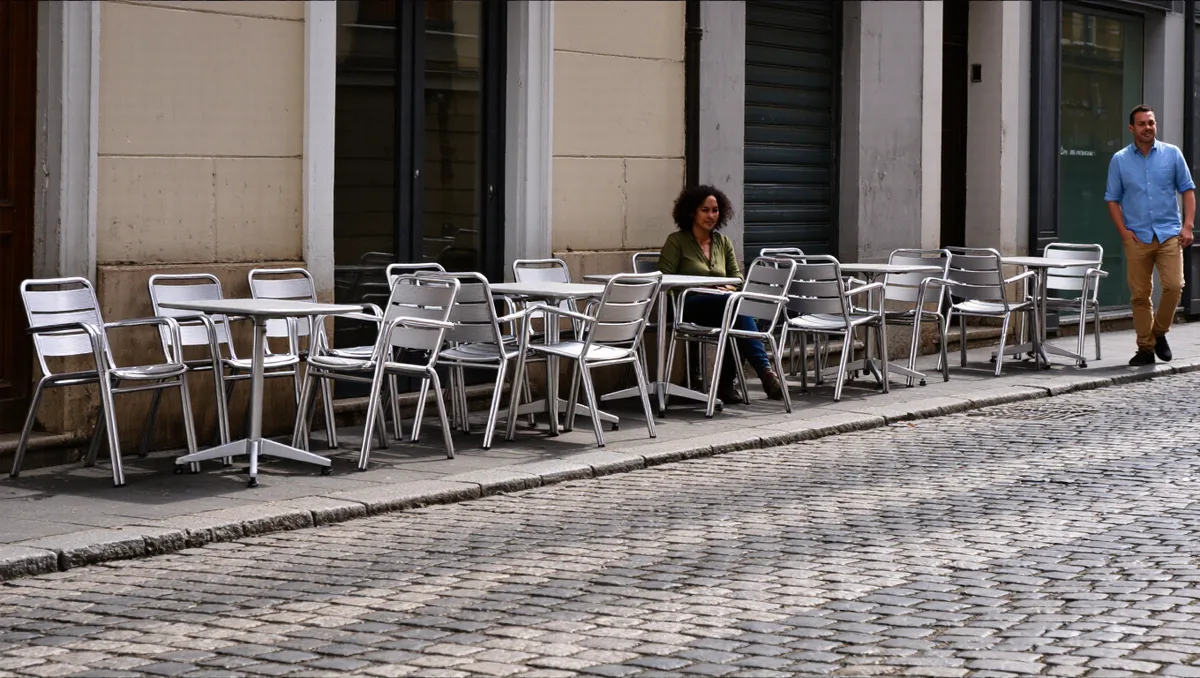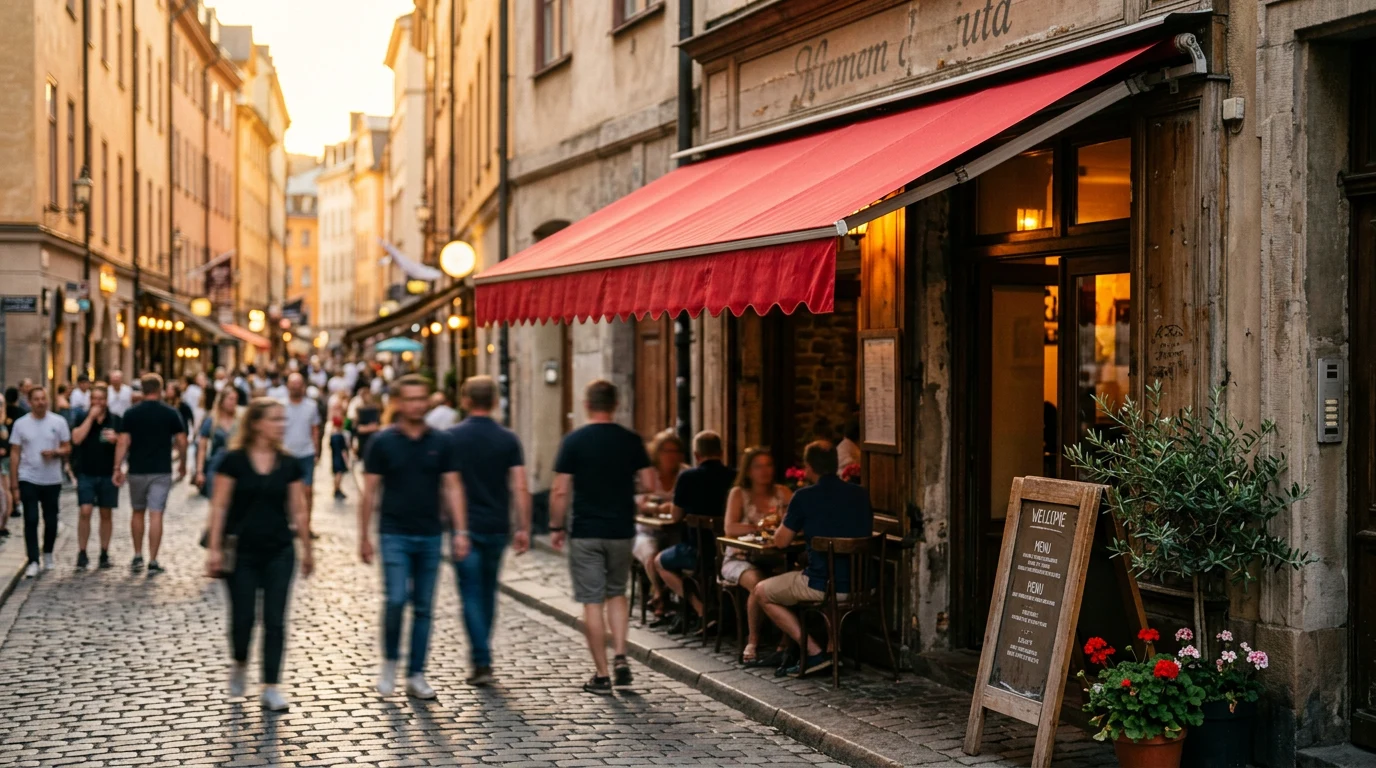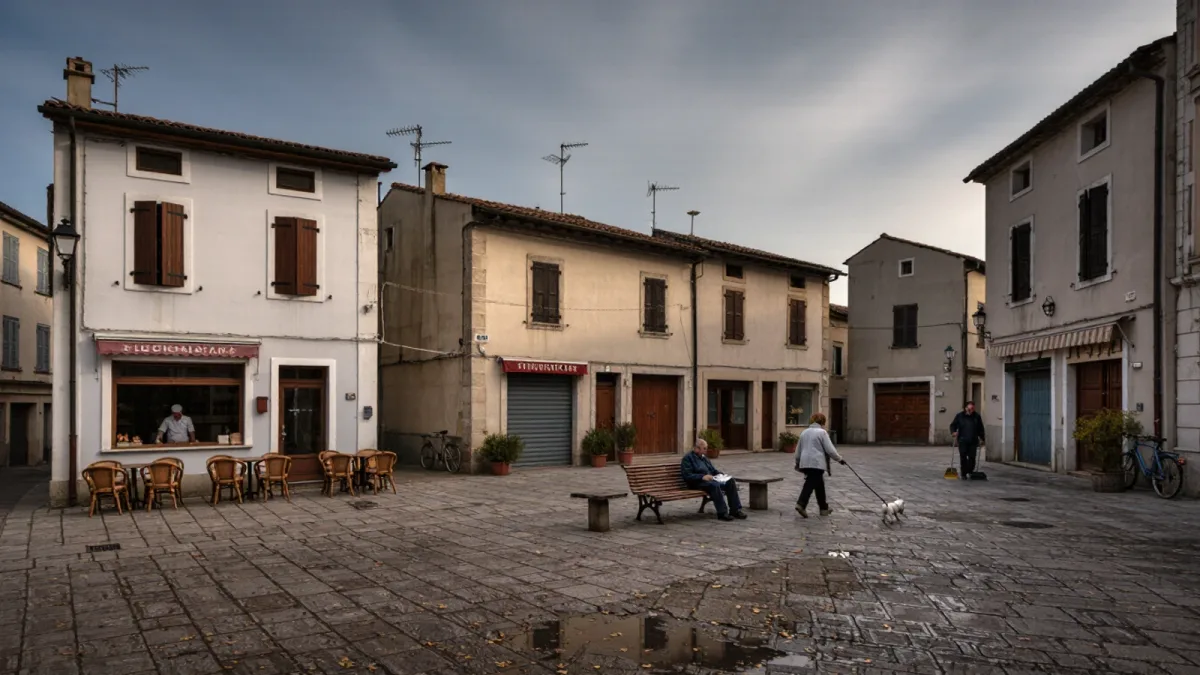
Some cities are famous for having nothing to see. The provincial town with one mild square, the industrial suburb, the residential district of any metropolis — places that exist in the travel imagination only as somewhere to pass through on the way to a destination. This essay is an argument for stopping in one of them on purpose, because the cities without monuments are where travel comes closest to doing what it claims to do: showing how other people live. The argument has an unlikely hero. In 1975 the French writer Georges Perec spent three days at a cafe table in the Place Saint-Sulpice in Paris — a perfectly ordinary square by the city's own standards — and attempted, in his words, to describe it exhaustively: what he calls, in the published title, "An Attempt at Exhausting a Place in Paris." The result, a slim book of buses, pigeons, clothing styles, weather and passing conversations overheard, is one of the strangest and most revealing travel documents of the century, and it was conducted at the exact opposite pole from the checklist.
What the monuments rank, and what they omit
The travel economy sorts cities by a single axis: density of designated sights. The sorting works, within its terms — a first visit to Rome should reasonably begin with Rome's answer to being Rome. But the axis measures a city's archive, not its life, and it systematically routes travelers away from the places where a country's ordinary present is conducted: the provincial capitals where the institutions actually are, the commuter cities where most residents of the famous region actually live, the new districts where a country is building its future. A traveler who has seen only monument-dense centers has seen the museum floor of a continent and mistaken it for the building. The boring city is the rest of the building.
What the generic city gives back
The architect Rem Koolhaas, in his 1995 essay "The Generic City," argued that the modern world is filling with placeless urban cores, interchangeable and historyless — and read him rightly, the observation is a loss. But the interchangeability cuts both ways. Precisely because the boring city performs no identity for visitors, it performs none for anyone: what remains is the operating reality of an ordinary urban life — the school run, the market rotations, the particular way a local bureaucracy answers its phones, the food that people cook when no visitor is watching. The monument city is constantly translating itself; the boring city does not know you are there, which is the condition the travel writer's vocabulary keeps trying and failing to describe with the word "authentic." Nothing is being staged, because nothing assumes an audience.
The Perec method, briefly
What Perec demonstrated is that "nothing to see" is an artifact of scale and attention, not a fact about places. His Saint-Sulpice inventory found an inexhaustible subject: the sequence of bus numbers, the inflections of weather on the square's users, the exact population of sparrows, the way the fountain ran or did not. The method transfers directly to travel. Take one ordinary square, street or market in a city with no sights, and give it an hour a day for a week; the place converts from blankness to specificity at a rate that famous squares — already exhausted by centuries of description — cannot match. The exercise also corrects the traveler's trained gaze, which has been taught to photograph significance and skip the middle range of life where most of the world is conducted.
The honest limits
The case for boring cities needs its caveats attached. Boredom is a real outcome: attention of the Perec kind is work, and a traveler without a specific interest — food, transit systems, vernacular architecture, how ordinary domestic life differs — may simply be bored, which is a cost no essay reframes away. Access matters too: the local life of an ordinary city is visible to a stranger mainly at street level, and a week is long enough to notice but not to understand. And the recommendation is not a ranking in reverse — monuments are not a scam, and the argument is not that everyone should visit nowhere famous. It is narrower: that the travel imagination has over-rewarded the archive and left the operating present unexamined, and that a night in a provincial city with dinner in a resident's restaurant and a morning at its market is not a consolation for missing the famous place. It is a different country, hiding inside the same one, and it has almost no queue at all.
Between the limits and the recommendation, one habit is worth carrying home from the boring city, because it improves the interesting ones too. The Perec hour — an assigned span of watching a single ordinary place without the intention to buy, enter or photograph — retrains exactly the faculty that monument travel exhausts. Visitors to famous cities spend their days moving between designated significance and treating everything between the sights as corridor; the corridor is where the actual city lives, and the trained eye has been taught to skip it. A week in a town with nothing to see recalibrates the eye so that every city afterwards has more to see in it. That may be the boring city’s real product: not the experience it offers, which is modest, but the attention it builds, which keeps. Perec’s square is famous now, among a small readership, for precisely that reason — a demonstration that exhaustiveness is not a property of places at all, but of the person standing still in one.
It also has to be admitted whose city this is. The traveler’s privilege of finding an ordinary place refreshing is the resident’s reason to leave it: the young leave boring cities precisely because they are boring, and a visitor’s praise of the unglamorous should be humble about that asymmetry. The most defensible version of the argument, then, is modest and reciprocal — go for the operating present rather than the archive, spend money at the scale of the ordinary (the bakery, the family restaurant, the market stall), and leave the place its self-respect rather than narrating it as a discovery. Boringness is a judgment made from the outside by people with somewhere else to be. The Perec hour is how an outsider earns a closer look without pretending, for a moment, that the place exists for the looking.
And if none of that persuades, there is the practical remainder: the boring city is where the trip gets affordable, where rooms cost what residents pay and dinner does not carry a view surcharge. Most trips through famous regions pass within twenty kilometers of a plain city where the same cuisine is served without ceremony and the hotel bills at half the rate. Spending even one night of a monument trip there rebalances the ledger — of money, certainly, but also of attention, which is the rarer currency. The archive will still be there in the morning, an hour away, and it will keep. It has, after all, nothing else to do. The ordinary city, by contrast, is only performing its ordinary Tuesday once — and on the evidence of anyone who has sat still long enough to watch, that Tuesday was the better show all along.