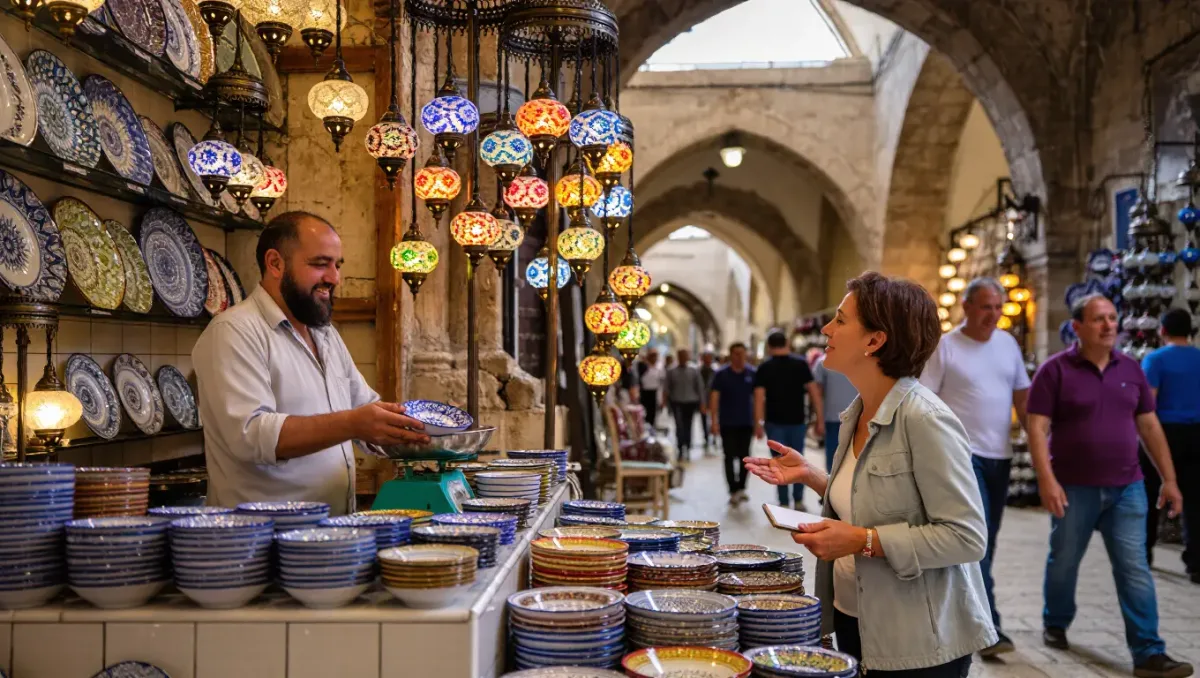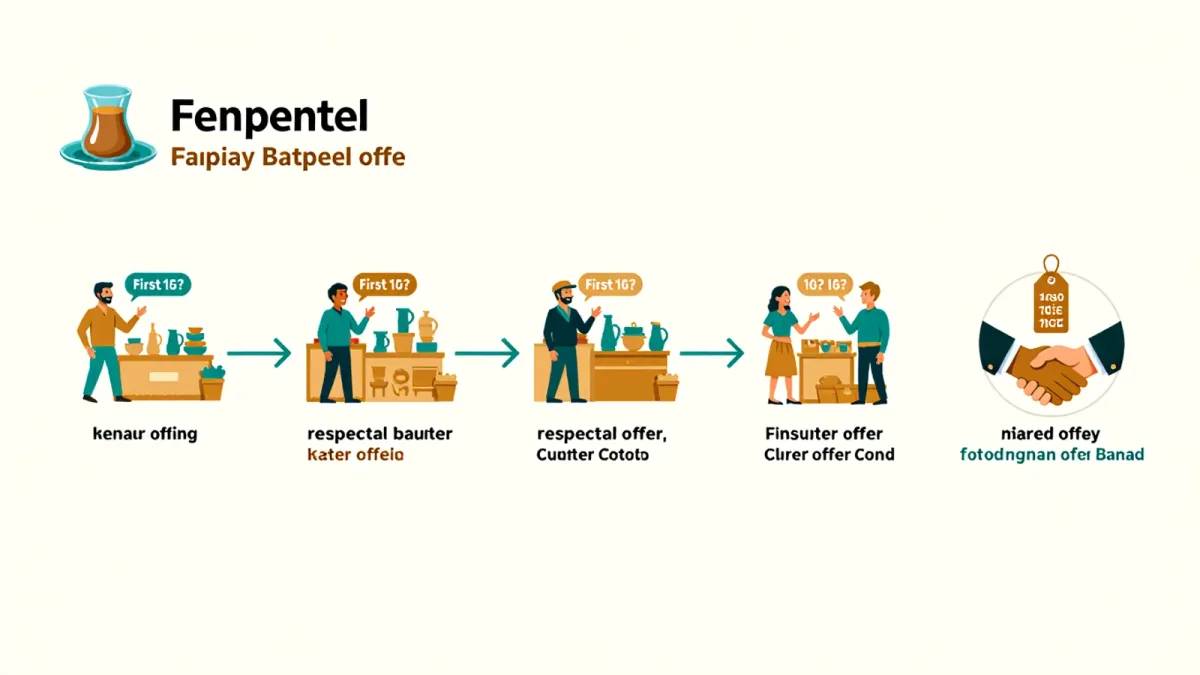
The bazaar's bargaining is a grammar, not a fight, and the Grand Bazaar of Istanbul is its largest school. Trading has run under the market's vaulted streets since construction began in the 1450s under Mehmed II, and the bazaar's several thousand shops, in the count most commonly cited, still price their goods through a negotiation whose stages are fixed enough to teach: interest is shown, tea is offered, the first price is pronounced, and the real conversation begins. Travelers who learn the grammar buy better and, more to the point, buy the way the market understands buying, which shopkeepers distinguish from pricing at a supermarket the way locals distinguish a conversation from a transaction.
Why does the bazaar negotiate at all?
Because the first price is a position, not a fact. In the bargaining markets of the eastern Mediterranean, the Caucasus, and Central Asia, the opening number carries information about the goods, the season, and the seller's assessment of the buyer, and the negotiation's purpose is for both parties to discover the price they can each defend. The stages are conventional: the seller names high and the buyer counters low, both with some theater; the offers narrow by decreasing increments; and the sale closes near a midpoint both sides claim to have regretted. Nobody is deceived, and the walk-away is a recognized move that either party may play once.
The culture around the negotiation is as codified as the numbers. A buyer who has haggled a price and then declines it, at the point of agreement, violates the exchange's standing rule and knows it; a seller who refuses tea to a seated browser does the same on his side. The market's etiquette protects both parties from the negotiation's inherent asymmetry, and the traveler who grasps this stops reading the performance as dishonesty and starts reading it as protocol.
The market's architecture is the culture's textbook, and Istanbul's is the grandest example. The Bedesten, the fortified inner market where the valuable goods were kept, anchors a grid of vaulted streets whose names still announce their trades; the bazaar grew by accretion for centuries after its 1450s beginnings, absorbing caravanserais, hans, and workshops until whole districts of artisans lived in symbiosis with the covered trade. Comparable complexes from Isfahan's Qaysariyya to the kupecheskie rows of Central Asian cities show the same logic, valuables at the fortified center, craft production adjacent, and the animal and produce markets outside, a geography of trust and value that predated banking and, in places, still substitutes for it.
What is the role of all that tea?
Hospitality as timing. The tulip-shaped glass of çay offered at a shop is not a sales trick so old it loops back to sincerity, though it is partly that; it marks the transaction's transition from browsing to negotiation, borrowing the guest-host frame in which lowballing a friend is thinkable and swindling one is not. Comparable customs hold across the bargaining world, coffee in the Arabian souks, dried fruit and nuts in Iranian bazaars, and the traveler's rule is uniform: accept what is offered, spend the time the ritual asks, and understand that the minutes of hospitality are part of the price discovery, on both sides of the counter.
Time is the currency that makes the whole system work. The bazaar's negotiation presumes no one is hurrying; a transaction closed in ninety seconds satisfies nobody, and the shopkeepers' lore holds that the buyer who enjoys the process pays fairer prices because the seller can afford to meet them. This is why the most reliable advice in every bazaar city is the same: go in the morning, when the shops are quiet and the tea is fresh, and let the first hour be learning rather than buying.
Every bazaar city adds a local ornament to the protocol, and the ornaments are worth learning as introductions. In Iranian bazaars the negotiation may run through a chain of courtesies so elaborate that the real offer is several exchanges in, and the guest who hears "this is the gift price" understands the moment has arrived. In the Marrakech souks the shopkeeper's offer of mint tea doubles as the shop's air conditioning, a cool roof terrace away from the lanes. In the Uzbek domes of Bukhara the bargaining is shorter, the fixed price more common, and the silk dealer's habit of showing you the loom where the atlas was woven is the market's version of provenance. The grammar is shared; the accents are local, and the traveler's ear calibrates within a morning of listening.
What does a respectful traveler do differently?
Know which market you are standing in. Fixed-price shops, cooperatives, and price-tagged dealers coexist with bargaining markets in every bazaar city, and haggling in the wrong one is as tone-deaf as paying the first price in the right one. In the bargaining markets, haggle everything that lacks a tag, in the friendly theatrical register the protocol expects, keep the walk-away genuine, and honor the agreed price once agreement is reached. Cash remains the negotiation's lubricant, and the polite close, thanks and a farewell rather than triumph, is remembered in neighborhoods where sellers outlast tourists by decades.
The deeper lesson of the bazaar is its definition of fairness. A fixed price treats fairness as sameness; the bazaar treats it as an agreement both parties can live with, reached face to face and sealed in tea. Travelers need not prefer the second definition to carry it respectfully for an hour, and the skills, patience, theater, and the honor of the deal, transfer to every bargaining market from Istanbul's covered streets to the market rows of Tashkent and the Atlas towns, wherever the roofs are old and the first price is merely an opening line.