The night train occupies a strange position in European transport: statistically marginal, culturally enormous. The Compagnie Internationale des Wagons-Lits, founded in 1872 by Georges Nagelmackers, built the sleeper as an institution, and the Orient Express, first run in 1883, turned the overnight departure into a European myth within a generation. The myth outlived the market: by the early 2000s the sleeper network was collapsing under cheap flights, and the genre's obituary was being drafted in every transport ministry. Then the plot reversed — Austria's ÖBB absorbed the German network's routes in the mid-2010s and rebranded its Nightjet service in 2016, new operators such as European Sleeper launched Brussels-Berlin-Prague services in 2023-2024, and by mid-2026, per a SwissInfo report on the revival's state, roughly 24 of the 33 night-train connections once planned for the network were actually running — a recovery, with an asterisk. This essay is not about the asterisk. It is about why the genre refuses to die, and what the night train does that no faster arrival has replicated.
The arithmetic of the sleeper
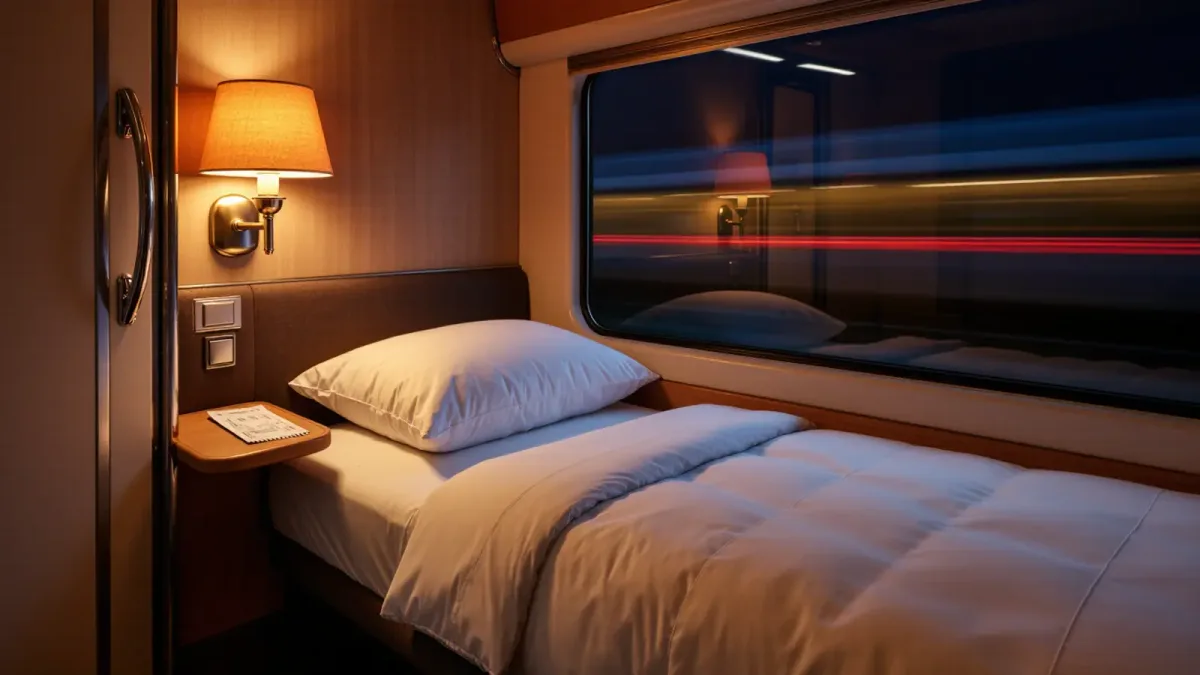
Begin with the honest economics, because the genre's logic is functional before it is romantic. The sleeper's ticket competes with a flight plus a hotel night: the cabin fare buys the transport and the accommodation in one transaction, and the schedule buys the day — departures at dusk arrive at dawn, so the traveler neither spends a day in transit nor wakes to an alarm in a hotel. The genre's customers have always understood this, from the interwar businessmen of the Wagons-Lits era to today's climate-conscious rail travelers. What the arithmetic cannot capture is the second economy: the night train sells hours of unusable, unoptimizable time — the one commodity the modern trips has otherwise engineered away.
Why the genre attracted a literature
The sleeper has always been more represented in culture than occupied in reality, and the reason is structural. The compartment is a short-story machine: strangers sealed together for eight hours, hierarchy compressed into upper and lower berths, borders crossed in sleep. The genre's classics run from the Orient Express's fictional invocations — Graham Greene's Stamboul Train (1932) among the most durable — through the spy thrillers that found the sealed compartment, with its diplomatic status and its corridor of locked doors, an irresistible device. Alfred Hitchcock built The Lady Vanishes (1938) inside a fictional Balkan sleeper. The literature understood something the timetables never recorded: the night train is a liminal country with its own laws — no one is quite accountable, everyone is slightly more honest, dawn resolves the plot. No other transport mode generated a canon because no other one manufactures the conditions fiction needs: confinement, transit, and the promise of arrival.
What the revival is actually reviving
Read the current revival carefully and it becomes clear that the sellable asset is not the carbon accounting, though the climate case is real, nor the comfort — the new Nightjet carriages are pleasant but hardly operatic. What the new operators are selling, per their own marketing and per the routes that succeeded versus failed, is the arrival: the traveler who steps off a night train in the morning has a full first day, has crossed a border in sleep, and holds a memory of departure at dusk that no airport lounge supplies. The revival is a bet that modern travelers miss the overnight arrival as a form — and the surviving services, the ones that filled their berths, are the ones on routes where the morning arrival matters most: the long north-south and east-west corridors where flying saves hours but costs days.
The genre's rules, as the literature keeps them
The accumulated texts agree on the practical choreography, which is worth preserving as the fleet grows again. Book the lower berth if the night matters; the upper buys a narrower world and more of the corridor's rhythm. Keep the ticket accessible at the border — the night train's inspections happen at inconvenient hours by design. Eat before boarding or in the dining car early; the genre's kitchens keep wagons-lits hours, not yours. And accept the noise contract: the night train does not promise silence, it promises arrival, and the two have always been separate commodities. Travelers who accept the contract report the same small revelation every generation — that a night can be spent moving and still be a night, and that the city outside the dawn window is a country already being handed to you, unspent.
The asterisk, and the point
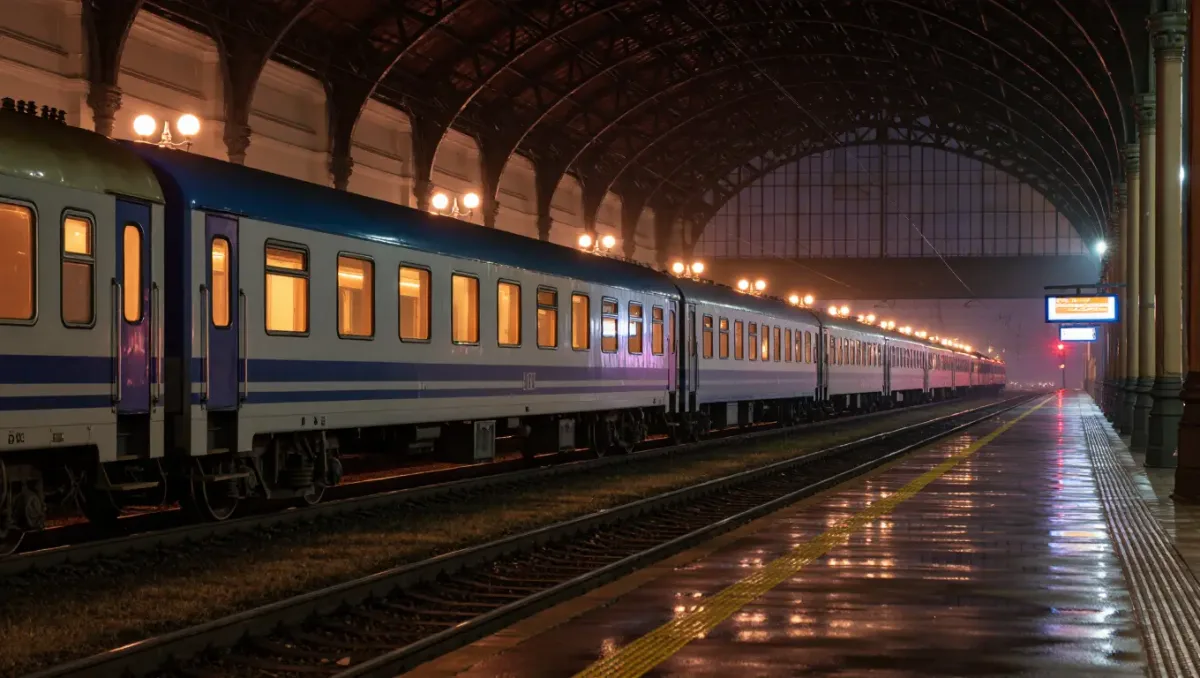
The revival's fragility — the eleven planned connections not running as of mid-2026, per the SwissInfo count — is real, a product of rolling-stock shortages, state subsidies of uneven depth and the permanent gravitational pull of the short flight. Whether the genre survives at network scale is a policy question, and honest essays do not resolve policy questions. But the century and a half of evidence suggests the sleeper is not primarily infrastructure; it is a form, like the essay itself — a way of spending a night that produces something the alternatives do not: the crossing as experience, the border in sleep, the morning city intact. Forms this durable do not die when their economics wobble. They wait in the station, lights low, for the traffic to remember them.
The sleeper’s particular knowledge
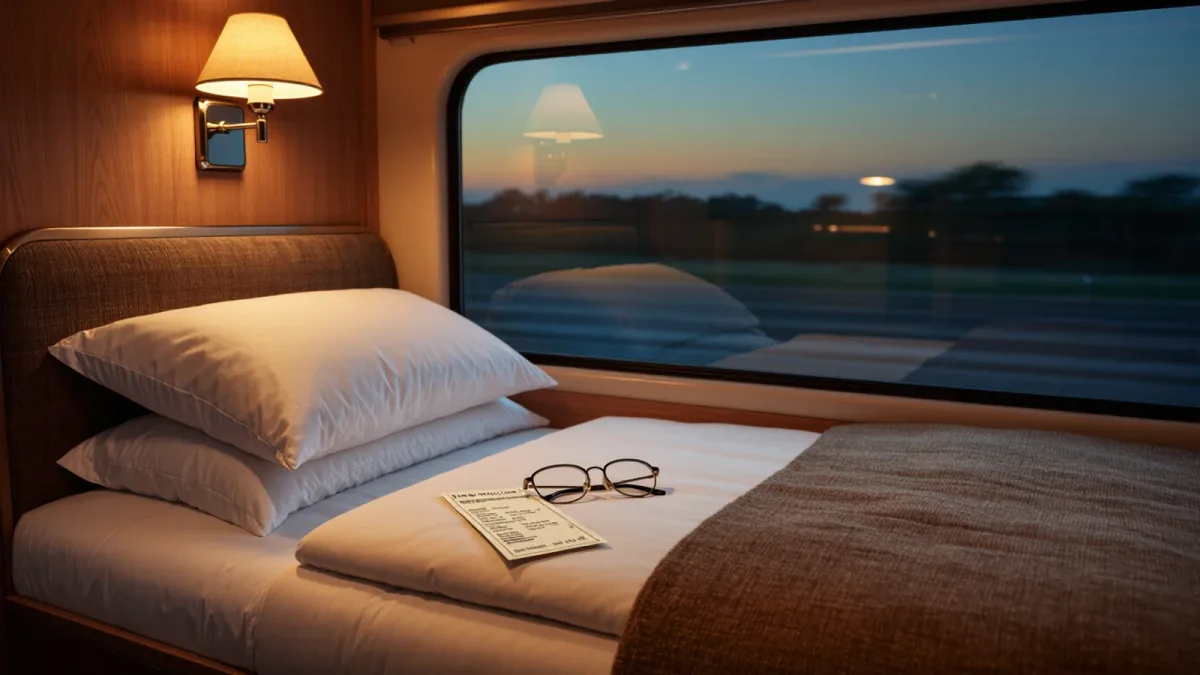
Every transport mode produces its own kind of geographic knowledge, and the night train’s is the strangest: the traveler learns a country by its passing sounds and its dawn. The awake stretches of the crossing deliver the freight yards, the lit river towns, the long halts at border stations where the locomotive changes and someone walks the length of the train — a sequence of documentary fragments no day train serves at those hours. Then the dawn window opens, and the genre delivers its signature transaction: a first sight of the destination arriving not through a taxi window or an airport approach but gradually, at ground level, through its own outskirts — the housing estates and market gardens and early factories that no city prints on its postcards and that constitute, unglamorously and truthfully, how the city actually lives. The day-train traveler sees the same outskirts; the difference is that the night-train traveler has earned them, having spent the darkness learning what an entire region sounds like while it sleeps. That knowledge is small, particular, and unavailable at any other speed — which is, reduced to a sentence, the genre’s entire pitch.
There is a personal-scale postscript to the structural argument, and it belongs to the boarding platform rather than the boardroom. The night train is the only European transport whose departure is itself an event worth arriving early for: the platforms at dusk, the lists of unfamiliar cities on the departure boards — Zagreb, Sofia, Vienna, Warsaw — the small crowd of travelers who have, by buying one ticket, committed to trusting a machine with an entire night. No flight requires that trust so visibly; the airport hides its machinery behind security lines, while the sleeper shows you the wheels. Standing on the platform as the carriages slide past, each window a small lit room, is to watch the genre assemble itself in real time: strangers’ nights, parallel and adjacent, all pointed at the same dawn. The literature found its settings here for good reason. The platform is where the story starts, and after a century and a half, it still does.