Travel writing is built on arrival at the unknown, and so it has had little to say about the one trips whose destination is already fully mapped in the traveler's memory: the return to a childhood place. The strangeness of that trip is structural. Every other trips trades the known for the new; the return trades the new for something known — but known by a person who no longer exists, in a version of the place that no longer exists either. Thomas Wolfe titled his 1940 novel about exactly this "You Can't Go Home Again," and the phrase has hardened into a cliché precisely because the experience underneath it is so universal. What follows is an attempt to take the return seriously as a form of travel, using what the psychology of nostalgia and place attachment has actually documented about it.
The word was coined by a doctor
Nostalgia entered the language as a diagnosis. The Swiss physician Johannes Hofer coined it in his 1688 medical dissertation to describe a fatal-seeming melancholy afflicting Swiss mercenaries fighting far from home — a disease of Swiss soldiers missing the Alps, treated at various points with rest, leave, and stern warnings against sentimental letters from the village. For two centuries the term lived in medicine before migrating, in the twentieth century, into ordinary speech as the feeling now universally familiar. The history matters because it preserves the original observation: the pull of the childhood place can be strong enough that serious people once thought it was a pathology. The modern research, led over recent decades by Constantine Sedikides, Tim Wildschut and colleagues at the University of Southampton, reversed the verdict — their studies consistently associate nostalgic reflection with increased social connectedness, self-continuity and meaning, not dysfunction. Nostalgia, on the current evidence, is a psychological resource. But a resource is not the same as a map.
The scale problem
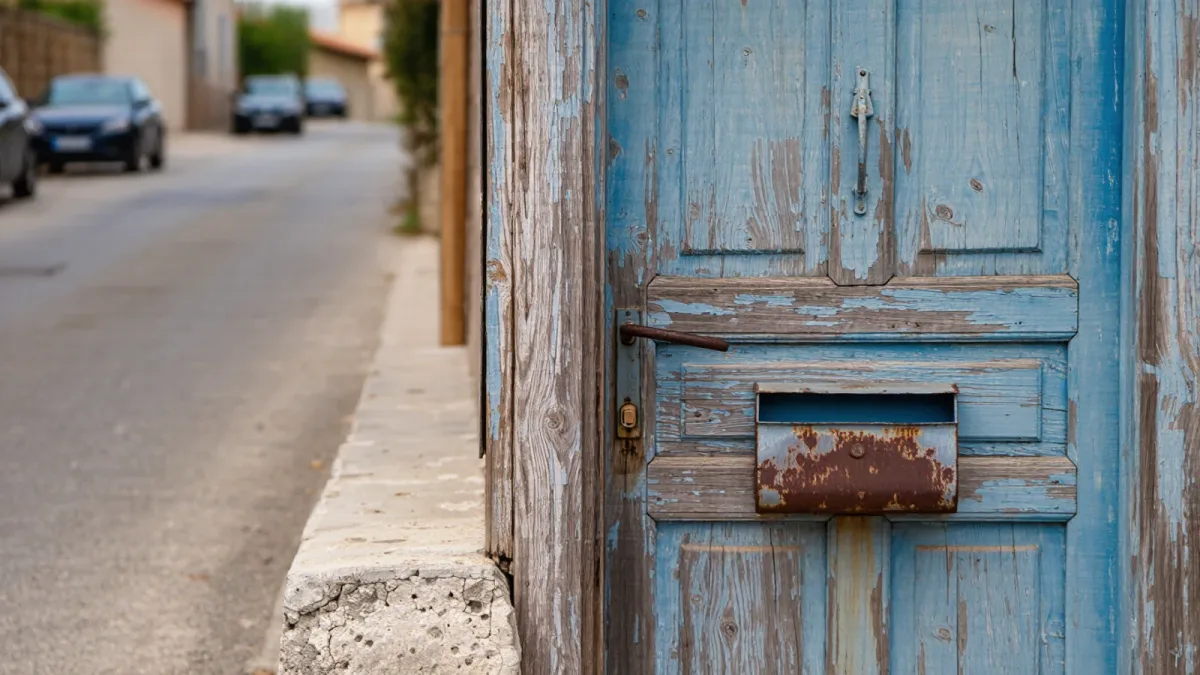
Every account of returning to a childhood place — in memoirs, in the documented interviews of place-attachment research — converges on the same first shock: the streets are short. The hill that took an afternoon is a two-minute slope; the legendary garden is a yard. The discrepancy is not memory's failure but memory's method: a child's smaller body and slower clock recorded the world at a different scale, and the adult's body re-measures it in an afternoon. Alongside the scale shock runs the alteration shock — the demolished kiosk, the painted-over door, the new estate on the old field — and the two together produce the return's signature emotion, which is neither pleasure nor grief but a kind of vertigo: two versions of one place held in one head, neither yielding to the other.
What the return is actually for
The place-attachment literature offers a useful frame here. Attachment to place, researchers have documented, functions like attachment to people: it provides continuity of identity across time. The childhood place is the anchor of the earliest self, and the return is an act of verification — a check that the anchor still exists in the world and not only in the head. On the evidence, the check is worth making carefully, because the place that survives alteration best is rarely the one that confirms the memory; it is the one that lets both be true. The travelers who report the return as valuable — rather than as merely sad — tend to describe a shift of expectation: from recovering the place to visiting it, the way one visits an elderly relative, with affection and without the demand that time be reversed. The demand is the disappointment; the visit is the gift.
The practical grammar of going back
What the accumulated accounts suggest, as method rather than sentiment, is a small set of practices. Return to the specifics rather than the summary: the exact school gate and the exact bakery address, which can be verified, survive comparison better than the generalized feeling of home, which cannot. Allow the failures — the closed pool, the strangers in the old apartment — to be information rather than injury; they are the documented proof that the past was real and therefore changeable, which is the return's actual lesson. And leave time for the third version of the place to appear: not the remembered one, not the altered one, but the one that exists now, with its own present-tense life, which the returning traveler usually begins to notice only on the second or third day. That place — neither memory nor ruin — is the one worth the trip. Going back, it turns out, is not a failure of travel imagination but its most demanding exercise: the one trips where the traveler must renegotiate not a foreign culture but an inherited one, and where the souvenirs come back as corrections.
One more documented register deserves its place: the return as departure. Everyone who goes back becomes, for a few days, a foreigner with a native accent — fluent in the old street names, ignorant of the new bus routes, a stranger who is greeted by a place that does not recognize them. That doubled position, researchers of return migration have noted in interviews with people who moved back to their hometowns permanently, is exactly the position from which a place becomes visible again. Residents stop seeing; visitors never saw. The returning traveler, briefly both, is the only observer a place reliably gets. This is the quiet argument for making the trip rather than defending the memory from it: not to confirm what the childhood place was, but to see, once, what it is — from the one vantage point that combines insider’s language with outsider’s eyes. The hill is short, the door is repainted, the bakery is a phone shop now. And down at the end of the street, someone is living a present-tense life in the place of your past, and waving back.
The madeleine, and what it got right
Literature noticed all of this long before the laboratories did, and the most famous case remains the most instructive. Proust’s madeleine episode in “In Search of Lost Time” (the first volume published in 1913) is usually misremembered as nostalgia performed; read closely, it is an argument about method — that the deepest past returns not through deliberate effort but through involuntary triggers, sensory and specific: a taste, a smell, the exact slant of afternoon light on a particular pavement. The return trip to the childhood place is essentially a controlled experiment on Proust’s observation. The traveler deliberately walks back into a landscape dense with triggers, and the involuntary memories arrive as promised — sudden, complete, more sensory than narrative. What the episode also predicts, and what returnees consistently confirm, is that these recoveries are transient and cannot be commanded. You can book the flight; you cannot book the madeleine. The most any return can do is put the traveler back in the field where the triggers grow, and stand still long enough for one of them to fire. When it does — the smell of a particular staircase, the sound a particular gate made — the trip’s real transaction completes: not the recovery of a place, but the recovery of the person who once lived in it, for the length of one breath.