The word itself gives the game away. Souvenir arrives in English from the French, which took it from the Latin subvenire — to come to mind, to come to the aid of. A souvenir is, etymologically and functionally, a memory-aid: an object whose entire value lies outside itself, in the experience it is charged with carrying back. The industry built on the word sells magnets, mugs, miniature landmarks and printed T-shirts in quantities that would be inexplicable for the objects themselves. Nobody buys a plaster Eiffel Tower for the plaster. The transaction only makes sense as an economy of meaning — and like any economy, it has producers, middlemen, counterfeits and exchanges that leave both sides feeling cheated.
The object that points away from itself
The consumer researcher Russell Belk gave the scholarly account its durable form in his 1988 essay "Possessions and the Extended Self," published in the Journal of Consumer Research: possessions are not external to identity but folded into it, and travel souvenirs are a privileged case — objects that function as "magical" evidence of having been elsewhere. Belk's formulation explains the souvenir's peculiar logic. Its material quality is nearly irrelevant; its function is testimonial. This is why a bus ticket or a pebble can outperform any retail object in the memory-work, and why the most emotionally loaded souvenirs are often the least photogenic: the coaster from the bar, the hotel pen, the pebble that was simply there when something happened.
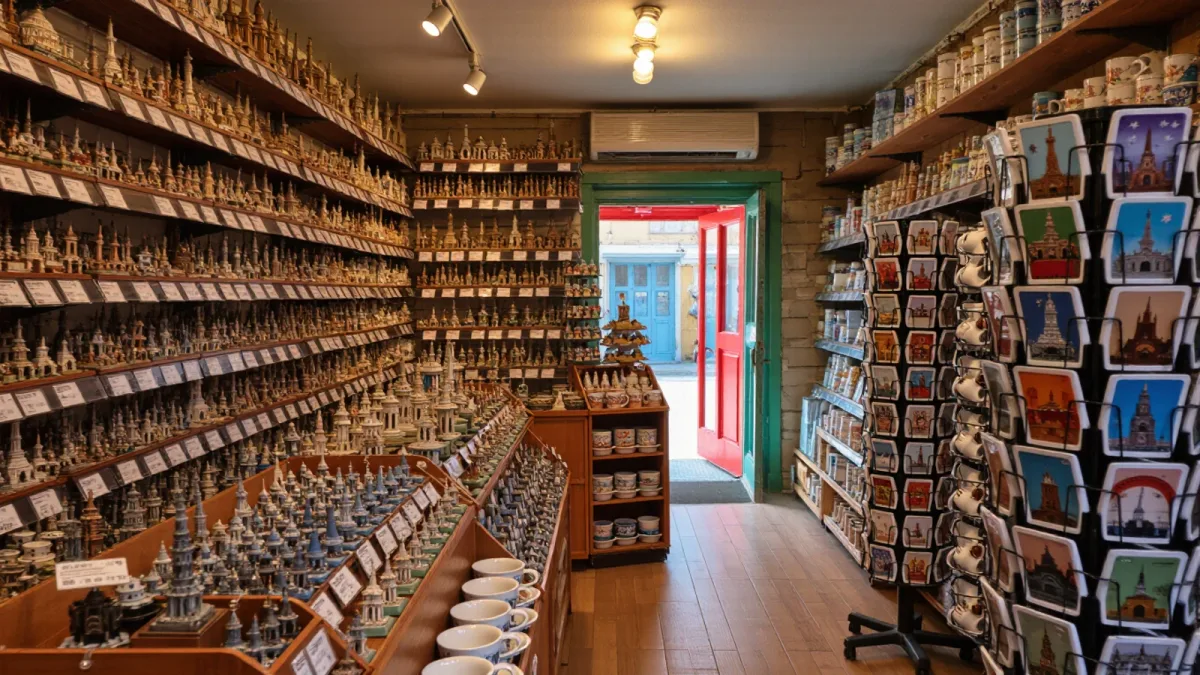
The gift shop, by contrast, sells testimony that was manufactured before the experience. A miniature cathedral bought in the cathedral's shadow is a strange object: proof of purchase more than proof of presence, its meaning assigned by the label rather than earned by the visit. Travelers sense this, which is why gift-shop purchases so often carry a faint embarrassment, and why the embarrassment is misplaced — the shop object and the found object serve different clauses of the same contract. The magnet on the fridge testifies to others that the trip happened; the pebble in the coat pocket testifies to the traveler what it was like.
Where the meaning is made
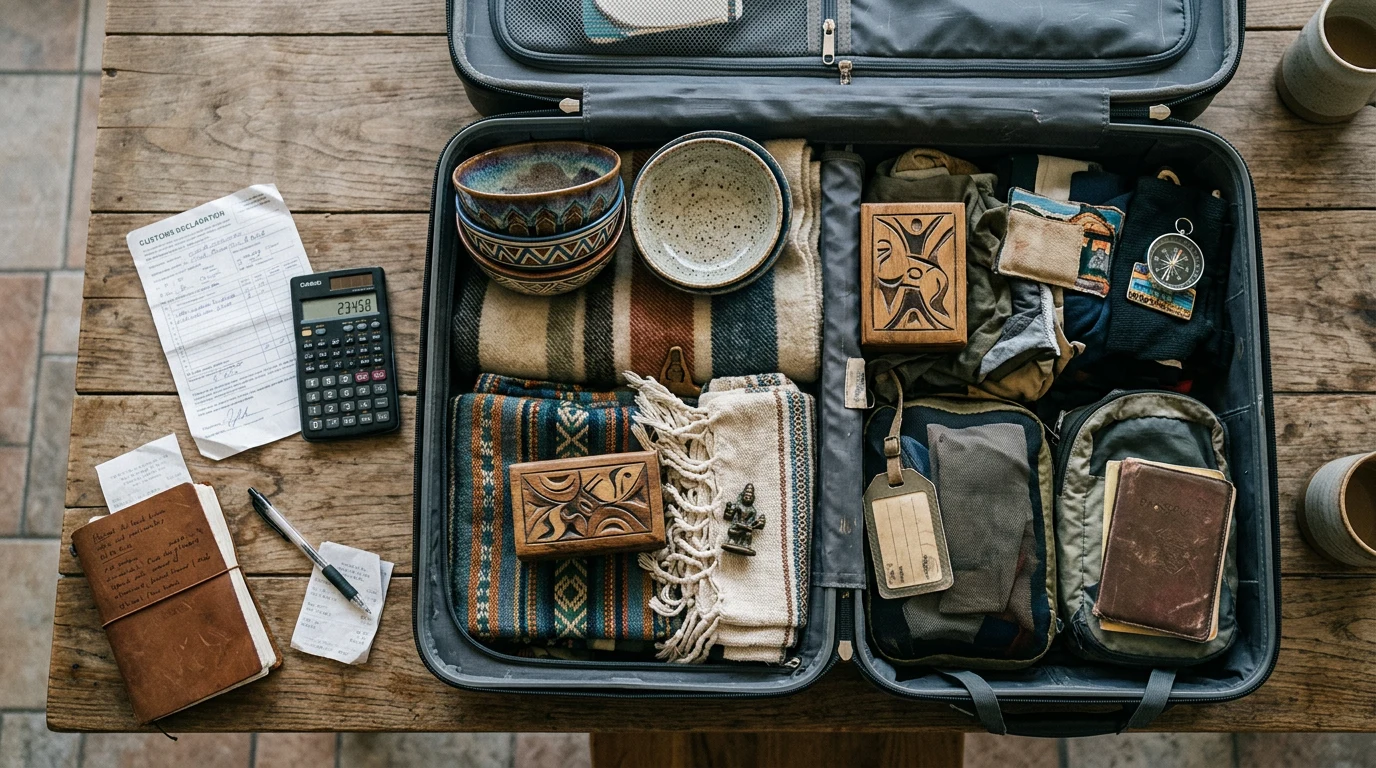
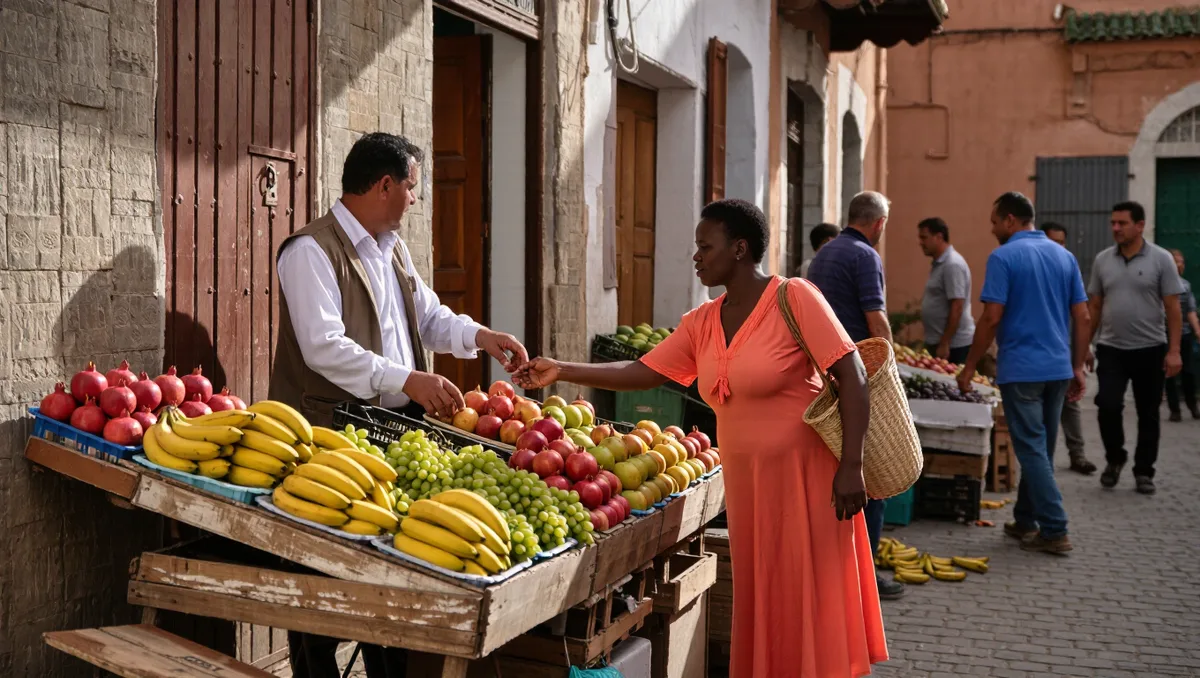
The tourism scholarship has documented for decades that a souvenir's value is assigned at the moment of acquisition, not at the moment of manufacture. The same hand-painted bowl is a commodity in the workshop, a souvenir in the market stall, and a relic once it has sat on a shelf for twenty years. The craft economy around this is enormous and, like all economies, uneven: much of what is sold as local handwork in high-volume tourist markets is imported, and the tourist's desire for provenance — for the object to have been made here, by someone, for real — is precisely the attribute most easily faked. The honest response is not cynicism but attention: the objects that survive as memory tend to be the ones whose acquisition involved contact — a conversation with the maker, a workshop visited, a choice made slowly. The transaction itself becomes part of the testimony.
The counterfeit problem, and the real one
Two senses of counterfeit operate in the souvenir economy, and only one is about authenticity. The trivial one is the fake-provenance object, ubiquitous and survivable. The serious one is the counterfeit of protected heritage: replicas of archaeological artifacts, coral and shell products from protected species, textiles sold under a region's name with no connection to its weavers. Customs services and heritage bodies run enforcement against these trades continuously, and the traveler's leverage is the same attention that improves memory: buy what can be explained, from someone who can explain it. An object whose story collapses under one question was never carrying much meaning to begin with.
What the fridge door actually holds
Look at a household's accumulated souvenirs after twenty years and the economy of meaning closes its loop. The expensive objects have often migrated to boxes; the cheap ones — the ticket, the matchbook, the chipped magnet from the trip remembered as the best one — hold the wall. Their endurance is not sentimentality but structure: they are the lightest possible vessels for the heaviest cargo, and the gift shop's mass-produced testimony, whatever its artistic poverty, still performs the oldest function the word carries. A souvenir is an aid that lets a place keep coming to mind. Whether it was bought in a cathedral shop or picked up from a curb matters far less than whether the coming actually happens — whether, on some gray Tuesday years later, a hand touches a small object and a street, a meal, a conversation briefly returns. That is the product the entire industry is laboring, clumsily and sometimes dishonestly, to deliver. It cannot manufacture it. It can only sell the vessel, and leave the charging to the traveler.
The gift clause
Roughly half of all souvenir purchases, the tourism literature keeps finding, are not for the buyer at all. The gift souvenirs deserve their own chapter in the economy of meaning because they perform a different operation: where the private souvenir testifies to a past, the gift souvenir advertises a relationship, and announces — delicately or otherwise — that the traveler thought of the recipient mid-trips. The obligations here are ancient. Travelers have always come back with things; the practice predates tourism by millennia, because the person who left and returned owes the community that endured the absence some token of the elsewhere. The fridge magnet for a coworker is a low-stakes descendant of the spice brought home from a voyage. Its cheapness is not a failure but a category: it says the trips was remembered without claiming the relationship was transformed, an exact social instrument calibrated to the office, the neighbor, the cousin. The high-stakes errors run in both directions — the grand gift that embarrasses a modest friendship, the absent gift read as neglect — and every traveler has committed at least one.
The other side of the counter
An honest account also has to stand on the selling side of the counter, because the souvenir economy is one of the largest direct interfaces between travelers and local makers — and one of the most lopsided. In high-volume destinations, the majority of shelf space can go to imported goods while the buyer imagines proximity; craft cooperatives and documented artisan workshops compete against that supply at a permanent price disadvantage. The traveler’s leverage is attention, spent twice: once in choosing objects that can be explained — a named technique, a region’s actual textile tradition, a workshop that welcomes the question — and once in accepting what the explained object costs. A hand-thrown bowl priced like a factory bowl is not a bargain; it is a symptom. None of this requires the traveler to become a scholar of provenance. It requires only the same habit the memory research recommends everywhere else on the road: slow down long enough to ask one question, and let the answer decide.
What emerges from all of it is a modest defense of the much-maligned gift shop. Its wares are derivative, mass-produced and often absurd, and yet the shop performs, at industrial scale, a translation service older than trade: it converts movement through the world into objects that can survive the trips home. The traveler who returns with nothing has, of course, lost nothing — memory does not require evidence. But the species has never quite believed that. We come back with things because coming back with things is how the returning gets finished, how the elsewhere is folded into the shelf and the drawer and the door of the fridge. The economy of meaning is built on a small, durable confusion — the hope that an object can hold a place — and on the daily, mostly harmless proof that, if the object is chosen with even a little attention, it can.