
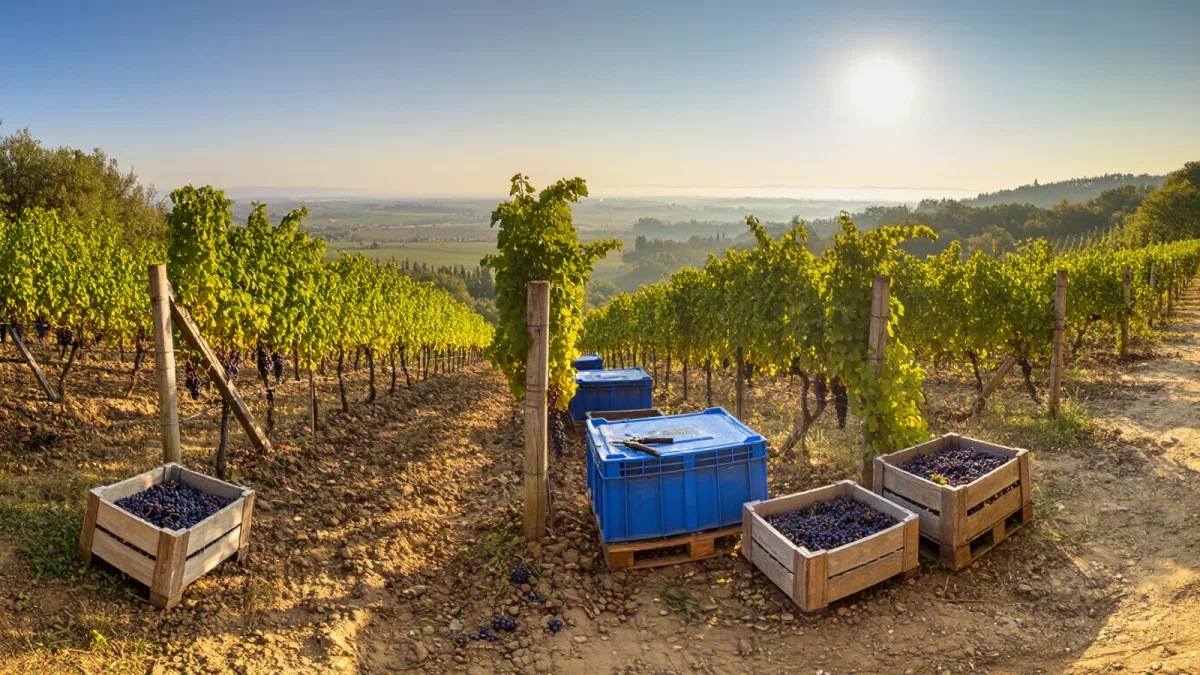
Seasonal work is the oldest structure under slow travel: the harvests, ski seasons, summer resorts and fishing fleets of the seasonal economy hire thousands of workers every year on contracts measured in months, and the job comes with a place in it. Grape harvests in France and Italy concentrate in September and October; the Alpine ski season runs roughly December through April; Mediterranean and resort towns staff up from May to September; and the southern hemisphere inverts the calendar, which is how seasonal workers chain summers. Done deliberately, the pattern is a way to live inside a place at working depth for a season — paid, not paying. This primer covers the sectors, the visa mechanics and the economics, which are honest but less romantic than the job title suggests.
Which sectors hire travelers?
Four dominate. Agriculture: planting, pruning and harvest work, from September grape and apple seasons in Europe to asparagus and berry campaigns in spring; hiring runs through local labor offices, farm cooperatives and dedicated seasonal job boards. Mountain tourism: ski resorts hire for the winter in everything from lift operations to kitchen work, with recruitment concentrated in early autumn for a December start. Summer resort and hospitality work: hotels, campsites, beach clubs and restaurants across the Mediterranean and beyond, hiring in spring. Events and festivals: the short-contract end of the market, concentrated in summer. Within the European Union, freedom of movement makes all of this administratively simple for EU citizens — the constraints are practical, not legal. For everyone else, visas are the whole game.
How do the visas work?
The main documented routes are three. Working holiday visas: bilateral schemes, mostly for travelers aged roughly 18 to 30 (up to 35 for some passport holders in some countries — Australia's scheme being the largest), allowing a year of residence with work permitted; conditions and caps vary by nationality and are published by each destination's immigration authority. The United States J-1 Summer Work Travel program: a State Department cultural exchange program that places university students in US seasonal jobs for up to four months during their summer break, with designated sponsor organizations. And sponsorship-based seasonal permits for specific sectors in specific countries, which employers typically arrange. The procedural rule outranks everything else: confirm the visa route before accepting any job, and treat any employer who waves the question aside as the warning it is. Nothing here is legal advice; the immigration authority of the destination country is the only source that counts.
Related stories: How work-exchange travel actually works, hour by hour · Europe's ferries are its slowest, most honest transport.
What does the money look like?
Seasonal wages track local minimums, and the honest arithmetic separates the sectors. Resort and hospitality jobs with staff accommodation convert low wages into high savings, because housing — the largest cost anywhere — is provided or subsidized; a ski season with a staff bed can bank real money, which is why the pattern repeats year after year. Agricultural piece work can outpay hourly resort work for fast workers and underpay everyone else in a bad season. The universal costs are upfront: travel to the job, gear (a ski season's equipment is a genuine investment), and one month of living expenses before the first paycheck, which always arrives later than expected. The slow-travel return beyond wages is the placement itself: a season's contract means months in one community, at its working rhythm, with the days off structured by the place rather than by an itinerary.
What goes wrong, and what protects you?
The documented failure modes are consistent: housing that turns out to be overcrowded or deducted heavily from wages, hours that expand past the contract, and — worst — recruitment fees charged upfront by intermediaries for jobs that do not exist. The protections are boring and effective: a written contract read before departure, wages confirmed against the destination's legal minimum, no recruitment fee paid to any intermediary (legitimate employers and official sponsors do not charge workers to apply), and independent confirmation of staff housing before traveling. Seasonal worker communities, notably in ski towns, are efficient information networks; one evening reading what previous season staff wrote about a specific employer is worth more than any listing's description.
One structural observation belongs at the end, because it explains why the pattern has survived every transportation revolution. The seasonal economy pays workers partly in place: a season’s contract embeds a person in a community’s busiest, most characteristic months — the grape crush, the Christmas weeks, the August high season — when a place is most fully itself and least available to visitors. Tourists buy the festival; the seasonal worker is on shift inside it. That embeddedness is the slow-travel return no wage calculation captures, and it explains the type the seasonal circuit keeps producing: not a traveler with a job, but a worker who, for one season, belongs somewhere enough to see how it runs. The money funds the next season. The season is the point.