Europe's ferry networks are the continent's most underrated slow-travel infrastructure: scheduled, extensive, comparatively cheap, and built at a pace — sixteen hours across the Baltic, a day hopping the Cyclades — that makes slowness a feature of the design rather than a sacrifice. Greece runs scheduled ferries to roughly 230 inhabited islands, per the national tourism ministry's long-standing count; the Croatian operator Jadrolinija, founded in 1947, stitches the Adriatic coast together year-round; and the Baltic overnight lines — Helsinki to Stockholm is the classic at about sixteen hours — function as unpaid cruises with cabins at hostel prices. This primer covers the networks, the booking logic and the rhythm of a trips planned at ferry speed.
Which networks reward a ferry-first trips?
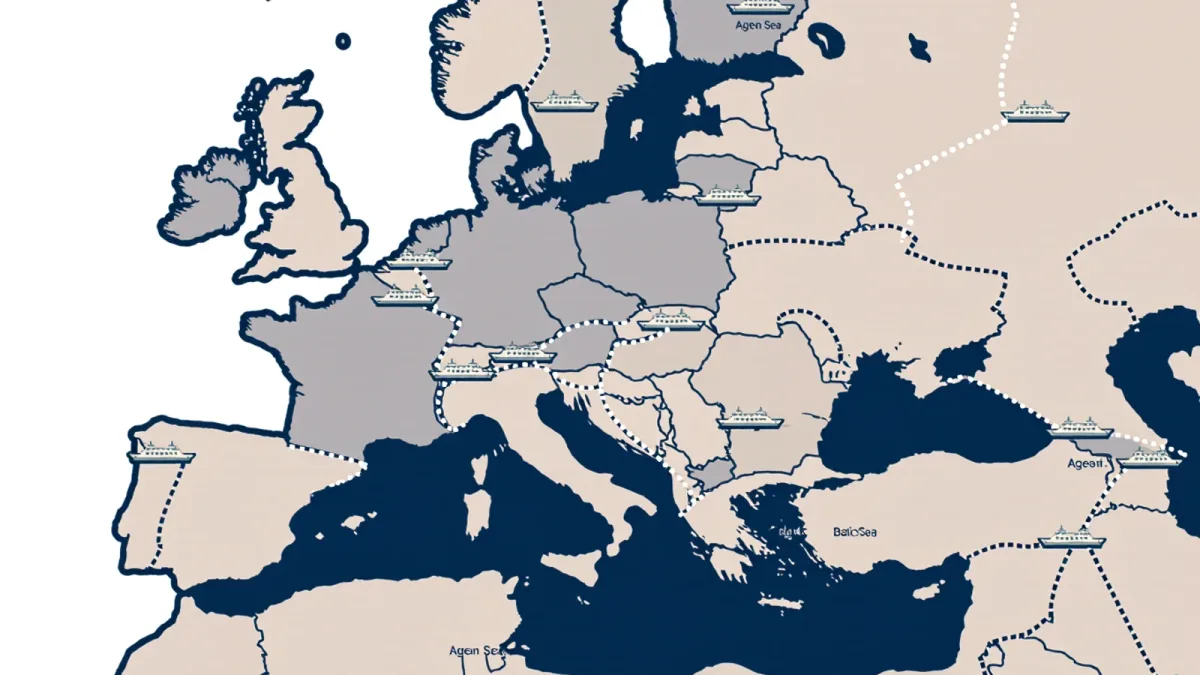
Four patterns are documented and repeatable. The Greek islands: dense summer schedules among the Cyclades and Dodecanese make multi-island itineraries practical without flying, with larger conventional vessels on the main lines and smaller boats on the thin ones. The Adriatic: Croatia's coast from Dubrovnik north, plus international lines toward Italy, run on a timetable a traveler can live inside for weeks. The Baltic: the overnight ferries between Helsinki, Stockholm, Tallinn and the region's capitals double as accommodation — book the cabin, sleep across the sea, save a hotel night. And the North Atlantic edge: Scotland's CalMac network to the Hebrides, and Norway's long coastal express route from Bergen to Kirkenes, are scheduled transport that happens to pass some of Europe's great coastline — the difference between a ferry and a cruise ship is precisely that one is going somewhere for a reason.
How do you book a slow ferry trips?
The mechanics differ from flights in ways that matter. Peak-season Greek and Adriatic ferries do sell out — vehicles first, then deck space — so August itineraries want bookings made weeks ahead, while shoulder-season crossings often allow walk-on flexibility that airline travel lost decades ago. Deck class is the slow traveler's lever: on the Baltic overnight lines, a cabin is worth the money; on daytime Greek crossings, deck passage with a chair and a railing is the local norm. Ticketing runs through operator sites and consolidators, and the two-second rule of ferry booking applies everywhere: check the operator's own timetable the same week you travel, because schedules thin out fast outside August.
What does the pace give back?
The slow-travel argument for ferries is not nostalgia but structure. A ferry crossing cannot be optimized shorter; the water takes its time, and the traveler who boards accepts the pace for the duration — four hours to Paros, sixteen to Stockholm — which produces a different relationship with the destination than the flight's compressed corridor. Ferries also carry the texture of ordinary life that air routes strip out: islanders with shopping trolleys, truck drivers, students going home for the weekend. The boat is the region's bus, and riding it seats the traveler among the people for whom the crossing is not an adventure but a Tuesday.
What should you plan around?
Three practicalities. Weather: wind, not schedule, is the final authority on thin routes — Greek island crossings in the meltemi season and Atlantic crossings generally can be delayed or cancelled, so build one buffer day per week of itinerary and never book a ferry landing two hours before a flight. Luggage: ferries are forgiving, but the walk from car deck to cabin is real — pack to be carried by one person. And food and cabins: onboard prices run high and cabins sell first, so for overnight sailings book early and for day crossings eat at the port before boarding. With those three absorbed, the ferry itinerary is among the most resilient forms of slow travel there is:routes that predate the timetable, running at the speed of the water, on schedules a traveler can actually live inside.
A closing note on the season itself, because it determines whether the ferry trips feels like transport or like hardship. The Mediterranean networks thin dramatically from late October and thicken from Easter; the Baltic lines run all winter and are best in the low-season darkness, when the sixteen hours are genuinely for sleeping; the Scottish and Norwegian routes run year-round and are weather-dependent in every one of them. The slow ferry traveler, like every other slow traveler, is rewarded for moving against the peak: May and September in the south offer full schedules, shoulder prices and deck space enough to lie down on, which is the ferry trips’s true luxury — not the food, not the lounge, but a deck chair, a horizon, and hours in which nothing faster is even theoretically possible.
For the traveler assembling a first ferry itinerary, the sequence that has worked for decades is still the one to start with: choose a single network rather than a grand European loop, since the networks reward intimacy — a month in the Cyclades, a fortnight down the Adriatic, one Baltic circuit — far more than a route that tries to touch all three. Within the network, travel the thin routes slowly and the thick routes at night: the small boats between minor islands in full daylight, the big overnight hulls across the open water. That allocation, more than any destination choice, is what makes a ferry trips feel earned rather than endured.