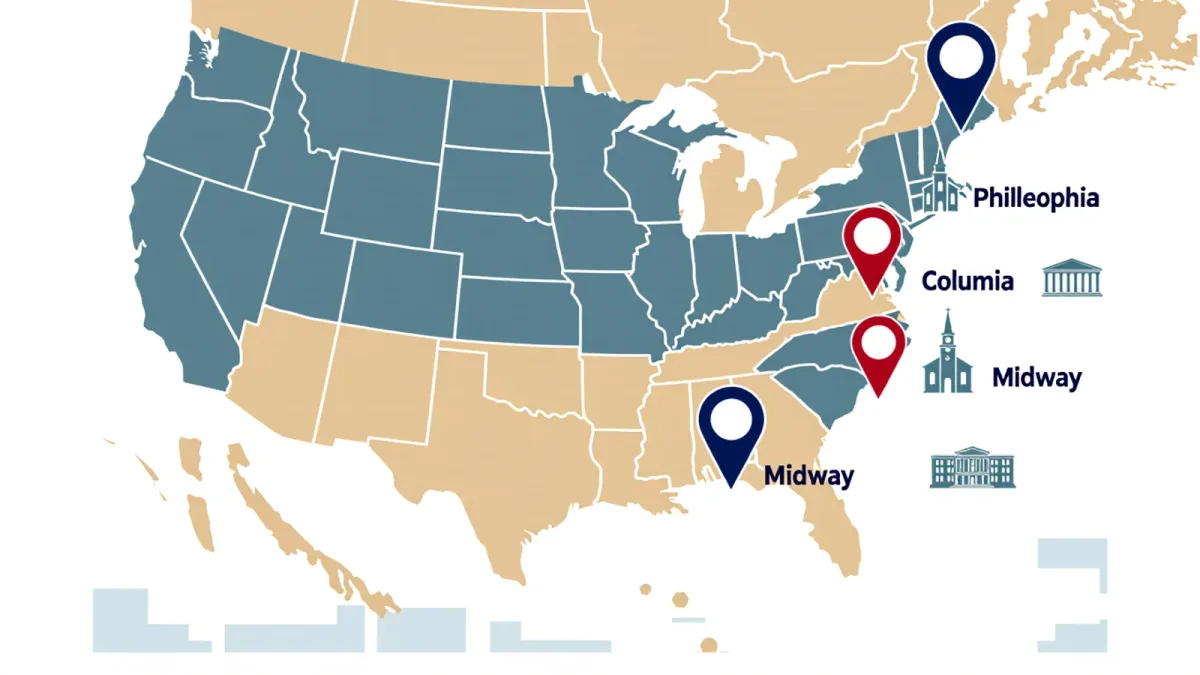
The National Park Service added three sites to the Reconstruction Era National Historic Network on July 14, 2026, per the agency's announcement from Beaufort, South Carolina: Mother Bethel African Methodist Episcopal Church in Philadelphia, the Susie King Taylor Museum and Freedom Park in Midway, Georgia, and the Center for Civil Rights History and Research at the University of South Carolina in Columbia.
The network, which now counts more than a hundred sites and programs, exists to connect places that tell the story of Reconstruction — the years after the Civil War when formerly enslaved Americans built schools, churches and political power across the South, and when many of those gains were later dismantled. Unlike a national park, network membership confers no land management role; it links museums, churches and campuses so that the era's history is told where it happened.
Why does a Philadelphia church belong to a Reconstruction network?
Mother Bethel, founded in the 1790s by Richard Allen, stands at the origin of independent Black church life in America, and its basement museum preserves two centuries of that history. The Park Service frames the church's role as the free Black institution-building out of which Reconstruction politics grew in the North as well as the South.
Who was Susie King Taylor?
Taylor escaped slavery during the Civil War, served as a nurse with Black Union regiments, and later taught freed people in Georgia — one of the era's documented first-person chroniclers through her published memoir. The museum and freedom park in Midway, near her home county, honors that life; its inclusion marks the network's attention to women's and medical histories of the period.
What does network membership mean for visitors?
Practically, it means interpretation, signage and educational programming coordinated with the Park Service, whose Reconstruction-era anchor park in Beaufort remains the network's physical center. For travelers along the Southeast coast and the Philadelphia-to-Columbia corridor, the three new entries extend a route of Reconstruction history that can now be walked, church to campus, without leaving documented ground.
Beaufort itself anchors the network because the town was among the first places where the federal government tested policies toward freed people during the Civil War, beginning with the 1861 Port Royal Experiment, whose schools and land sales prefigured Reconstruction on a national scale.