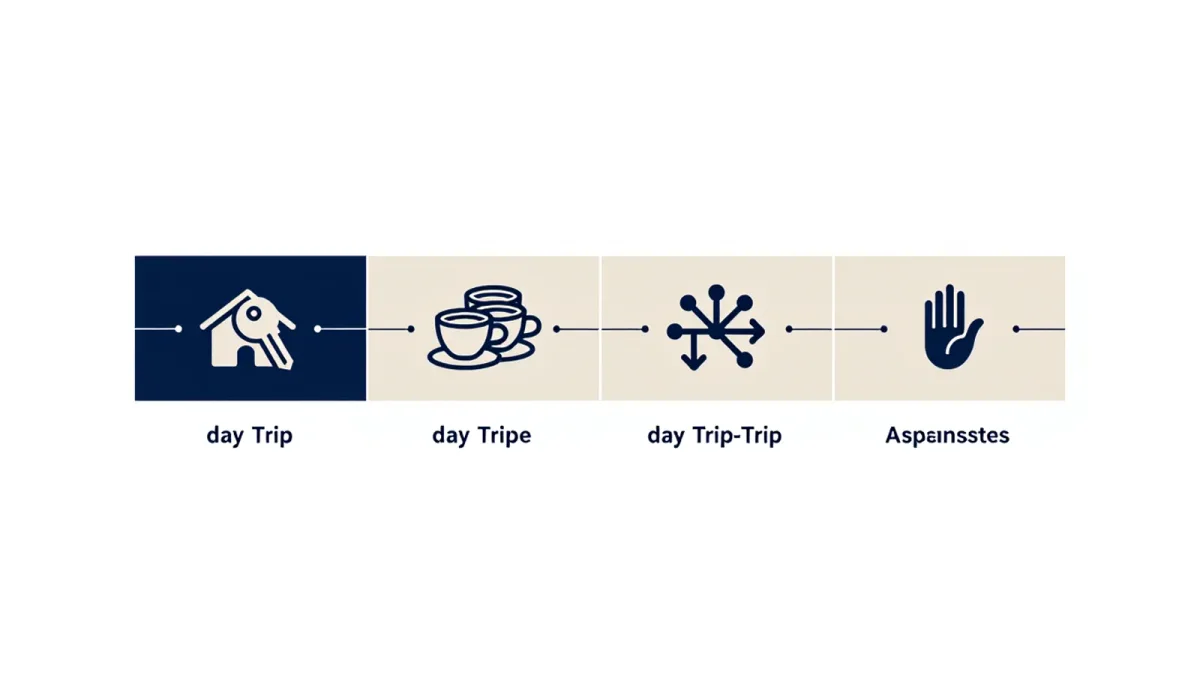
A month in one city is the most reliable unit of slow travel: long enough for monthly lodging rates and flat transport passes to work, short enough to fit inside a work arrangement or a school break, and structured enough to need a method. Without one, a long stay drifts — the first week over-planned, the middle weeks under-used, the last week consumed by logistics. The method below is the one that recurs across experienced long-stay travelers: a four-week rhythm in which each week has a distinct job.
What happens in week one?
Week one is infrastructure, and it should be planned with almost nothing in it. The work: learn the apartment's systems, find the nearest full market and pharmacy, walk a loop of the neighborhood twice — once by day, once by dusk — and establish the three routines that will carry the month: the morning coffee place, the evening walk, the nearest food shop. Every tourist wants the landmarks in week one; the method defers them deliberately, because week-one energy is the scarcest resource of the stay and infrastructure built now pays out for the other three weeks. The one exception: book any fixed-entry sight that requires advance reservation, so week two is not governed by a ticket deadline.
What is week two for?
Week two is repetition, and repetition is the actual mechanism by which a stay becomes residence. Go back to the market and buy from the same stall; return to the same bakery until the person behind the counter stops treating you as new; sit in the same park at the same hour. The research intuition behind the practice is simple: recognition, not novelty, is what makes a place legible. Week two is also when the city's ordinary calendar surfaces — the market days, the neighborhood feast, the evening hour when the whole district seems to walk — because ordinary calendars only reveal themselves to people who repeat.
How far should week three range?
With routines holding, week three is for range: day trips by regional train to the smaller places within an hour or so, the long museum with timed entry, the restaurant booked a week out. Range in week three rather than week one has a specific advantage — the day trips now depart from a known home and return to it, which changes their character entirely. A day trip from a base is an excursion; the same trip strung into a moving itinerary is a transit. Week three is also the time for the city's bigger instrument, the thing that needs energy: the hike to the far hill, the all-day market town, the second district altogether.
What does week four do?
Week four belongs to the rituals built earlier, deliberately revisited: the same cafe, the same bench, the same walk, now performed with the light awareness of endings. Practically, the week carries the departure logistics — laundry, refundable deposits, the final market run — but its real function is consolidation. The stay's residue in memory is mostly assembled from repetition, and a final pass over the repetitions is what seals them. Long-stay veterans describe the same closing move: one ordinary errand, done for the last time, done slowly.
What does the method assume?
Three preconditions, all checkable in advance. Lodging with a kitchen, on a monthly rate — the structural advantage covered in the long-stay math. A base in a residential rather than touristic quarter, within walking range of a market and transport. And uncommitted mornings: the method runs on two or three open hours a day; remote workers adapt by protecting one morning block, and families by letting the children's rhythms set the repetition. What the method does not assume is fluency, youth, or unlimited budget — only the willingness to repeat the ordinary until the ordinary opens.
Two refinements make the template durable. The first is the weather clause: book the base for the month’s ordinary climate, not its postcard one — a northern city in November is a different proposition from the same city in June, and the method’s emphasis on walking loops and evening routines assumes weather a person can stand outside in for an hour. The second is the local anchor: one recurring commitment outside the apartment — a weekly class, a language exchange evening, a volunteer shift, a standing table at the market cafe — fixed in week one and attended all four weeks. Long-stay travelers who adopt an anchor report the same result: it converts them from visitors on a long schedule into participants on the neighborhood’s schedule, because an anchor generates introductions, obligations and recognition that no amount of solo repetition can manufacture. It is the closest thing the method has to a shortcut, and it costs one evening a week.