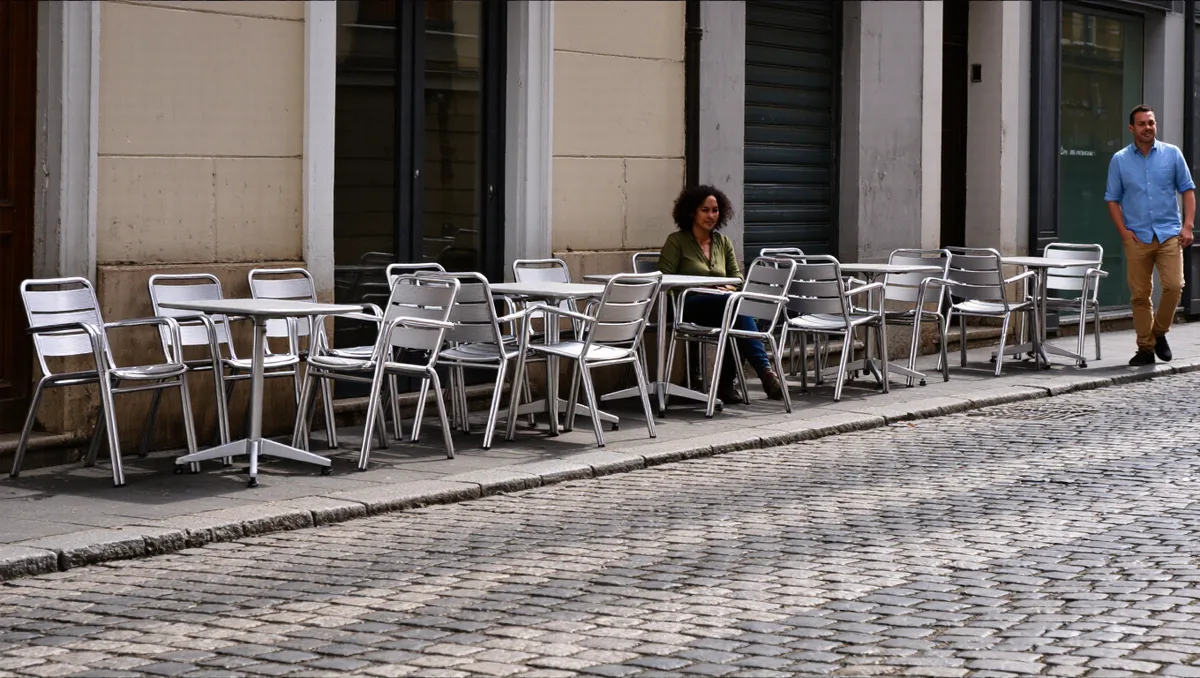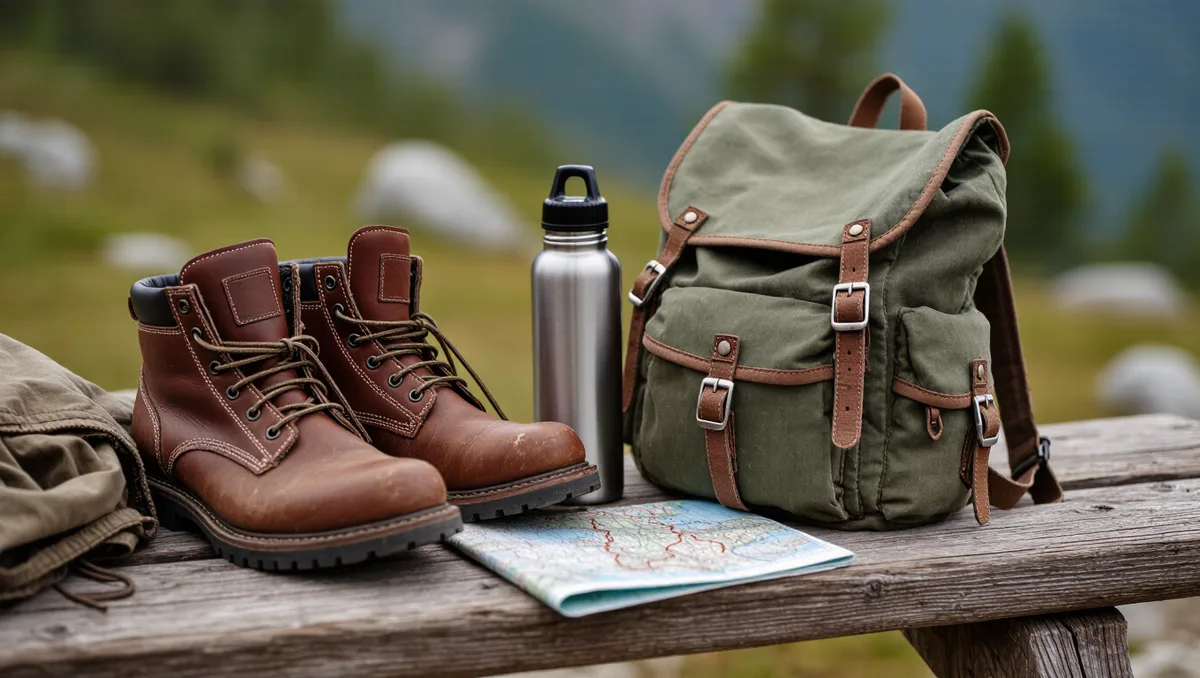
Slow travel means spending more time in fewer places, and letting the journey itself count as part of the trip. Instead of a week that touches four cities, it is a week in one city, walked rather than ticked off. The point is not speed for its own sake. The point is what becomes visible when you stop moving so fast: a neighborhood's morning routine, the regulars at a bakery, the way a town changes between the market and the evening.
The word itself helps. Merriam-Webster defines slow, in one sense, as "not hasty or precipitate" — and in another as "requiring a long time: gradual." Both senses fit. Slow travel is unhurried by choice, and gradual by method. Understanding arrives the way a slow recovery does: over days, not hours.
This piece unpacks the idea in plain language. Where the philosophy came from, how it differs from a normal itinerary, what it costs, and why it works for so many kinds of travelers — including, structurally, families.
What does slow travel actually mean?
Slow travel is a set of choices, not a checklist. You pick fewer destinations. You stay longer in each. You favor ground transport — walking, regional trains, ferries — over the fastest possible connection. You build days around one or two intentions rather than a list of eight. And you leave gaps: an afternoon with nothing scheduled, on purpose.
The word "slow" matters here because it is deliberate, not deficient. Cambridge Dictionary lists "leisurely" and "unhurried" among its closest synonyms — a leisurely drive along a quiet coast road, an unhurried pace of life. That is the register. Slow travel is not a broken schedule. It is a schedule designed to resist hurry.
It also borrows from a wider cultural movement. The encyclopedia entry on "slow" records a Slow movement in culture that "emphasizes a slower pace in a variety of lifestyle and social areas," with offshoots like slow living, slow reading, and Slow Food, the organization that promotes local food and traditional cooking. Travel is one branch of that same tree. Carl Honoré's 2004 book In Praise of Slow, which the same entry describes as an analysis of the "Cult of Speed," gave the broader movement its most widely read argument.
How is it different from a normal itinerary?
A conventional itinerary optimizes coverage. It answers: how many places can I see in the days I have? Slow travel optimizes depth. It answers: what will I actually know about this place when I leave?
The difference shows up in small mechanics. A fast trip books hotels near stations for early checkouts. A slow trip books a monthly rental near a market, because you will shop there six times. A fast trip buys the multi-city flight pass first and fills in the middle later. A slow trip picks the route first — a ferry crossing, a regional rail line — and lets the stops follow the route.
Neither approach is wrong. The honest trade-off is this: slow travel trades breadth for texture. You will see fewer famous things. You will also stop experiencing a city as a queue.
Why does slow travel work?
Three reasons, all practical rather than romantic.
- Fewer transitions mean less overhead. Every move between cities costs money, time, and attention: packing, transfers, check-in, reorientation. Cut the number of moves and you cut the tax. The monthly math behind this is laid out in The monthly math that makes slow travel cheaper than a vacation.
- Long stays unlock different prices. Weekly and monthly rental rates, local transport passes, and cooking some of your own meals all favor the traveler who lingers. The savings are structural, not luck.
- Familiarity compounds. Day three in a place is when you stop navigating and start noticing. That is when a trip stops being a list and starts being a memory with details attached.
Our analysis: the deepest reason it works is that slow travel matches its costs to its benefits. Fast travel spends its budget on movement. Slow travel spends it on presence. Most people, asked afterward what they remember from a trip, remember presence.
What does slow travel look like in practice?
It looks like a week in one neighborhood rather than a country in a week — a method broken down week by week in How to stay a week in one place. It looks like choosing the ferry over the flight, because Europe's ferries are its slowest, most honest transport. It looks like walking as the primary way of learning a city, which is its own method, not a fallback.
It also looks different for different travelers. For families, the case is structural: children adapt badly to constant repacking and early departures, and slowly enough days give them room to be children. For people who work while traveling, the long stay is what makes work and travel compatible at all — a distinction explored in The case against the three-month city, and for the long stay.
One caution. Slow travel is not a virtue ranking. A two-day visit that delights you beats a two-week stay that resents itself. The philosophy asks you to choose your pace, not to perform someone else's.
Where should a first slow trip start?
Start small and close. Pick one place reachable by ground transport from where you already are. Stay a full week. Book lodging with a kitchen. On day one, walk without a destination. On day two, shop where locals shop. By day three, you will have a routine, and the routine is the point.
Keep the itinerary to one fixed commitment per day. Everything else is optional. If a museum absorbs you for four hours, let it. If a plaza does the same, let that happen too. The schedule exists to protect the slow part, not to defeat it.
What slow travel establishes, and what it leaves open
What the evidence and the movement's own record establish is modest and clear: slow travel is a recognized branch of a broader cultural shift toward unhurried living, and its practical advantages — fewer transitions, better long-stay economics, deeper familiarity — follow from its structure, not from sentiment. What remains open is personal. How much breadth you are willing to trade for depth is a question no guide can answer for you. The only honest test is to try one slow week, and notice what you remember a month later.