Family travel fails at speed. The checklist itinerary built for adults — six cities in ten days, early departures, one landmark per morning — collides with the operating requirements of children: sleep, food, downtime, and the unpredictable timing of everything. Slow travel with kids is not a softer version of the same trip; it is a different mechanism, with one base instead of many, a kitchen instead of restaurant dependency, one planned activity per day instead of three, and flat-rate transport that removes the per-move cost pressure. The structure does the parenting work that speed defeats. This primer covers the mechanics, the money and the honest difficulties.
Why does one base outperform the multi-city plan?
Every inter-city move with children costs two to four hours of logistics per child-equivalent of friction: packing, transfers, the lost nap, the new-room adjustment that resets sleep routines for days. Reducing three moves to zero removes that cost entirely, and the reward compounds daily — a child who knows the neighborhood bakery, the playground two streets away and the apartment's rhythm stops being a traveler being dragged and starts being a resident on holiday. The pattern long-stay families report is consistent: children need roughly three days in a place to stop asking when they are leaving. The multi-city trip never gets past day one, six times.
What does the money look like?
Three documented advantages. Lodging: an apartment with a kitchen prices far below two hotel rooms once a family passes four people, and monthly rates step down again as covered in long-stay comparisons — commonly 30 to 50 percent below nightly totals on long-stay platforms. Transport: Europe's family fare rules are generous — on Deutsche Bahn, for example, children under 15 travel free when accompanied by a parent holding a ticket, per operator terms, and the under-6s ride free universally; a monthly flat-rate pass such as the Deutschland-Ticket (€63 from January 2026, per Deutsche Bahn) then covers regional rail for the whole family at near-zero marginal cost. Food: the kitchen again, the single largest saving in any long-stay budget, doubled in effect for families because children's restaurant tolerance is finite.
How do you structure the days?
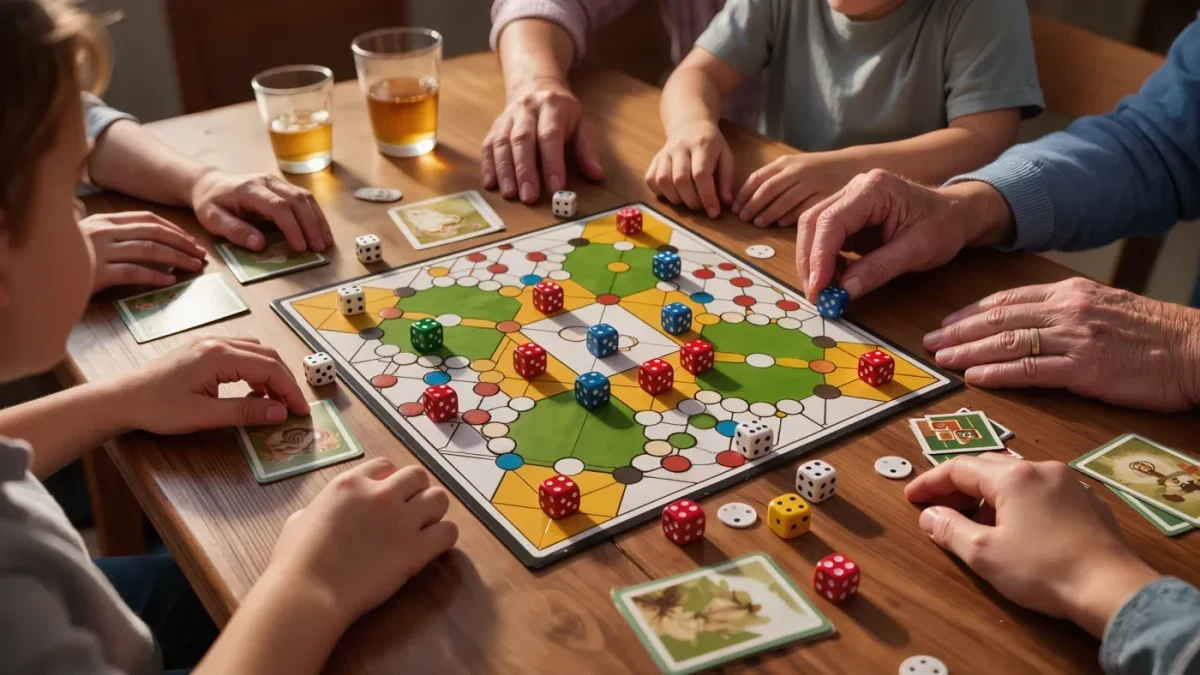
The working formula, repeated across family slow-travel practice: one committed activity per day, scheduled for the morning; afternoons unstructured; the same bedtime as home. The one-activity rule sounds austere and produces more, not less — a single market visit with no deadline absorbs the climbing frame, the cheese tasting and the stray cat that a checklist would have routed around. School-age children add documentation considerations: absence rules vary sharply by country and school district, and families traveling mid-term verify their school's policy before booking rather than after. Long school breaks — roughly ten to twelve weeks across a European or North American summer — comfortably fit a month-long base-and-day-trips structure.
What do children actually get from it?
The honest answer separates the demonstrable from the claimed. Demonstrable: children on slow trips spend their days in ordinary place-life — markets, trains, playgrounds, residential streets — which is where a country's actual daily culture lives, and which the checklist trip routes them past. Language exposure works the same way: a month of hearing the ambient language, and of being sent to buy bread in it, produces more practical engagement than any app. The claimed benefits — empathy, adaptability, global-mindedness — are real anecdotes and thin research; what is documented is simpler and sufficient: slow trips are ones children remember as life rather than as a series of attractions, because they had time to be somewhere instead of merely being taken.
What breaks, and how do you plan for it?
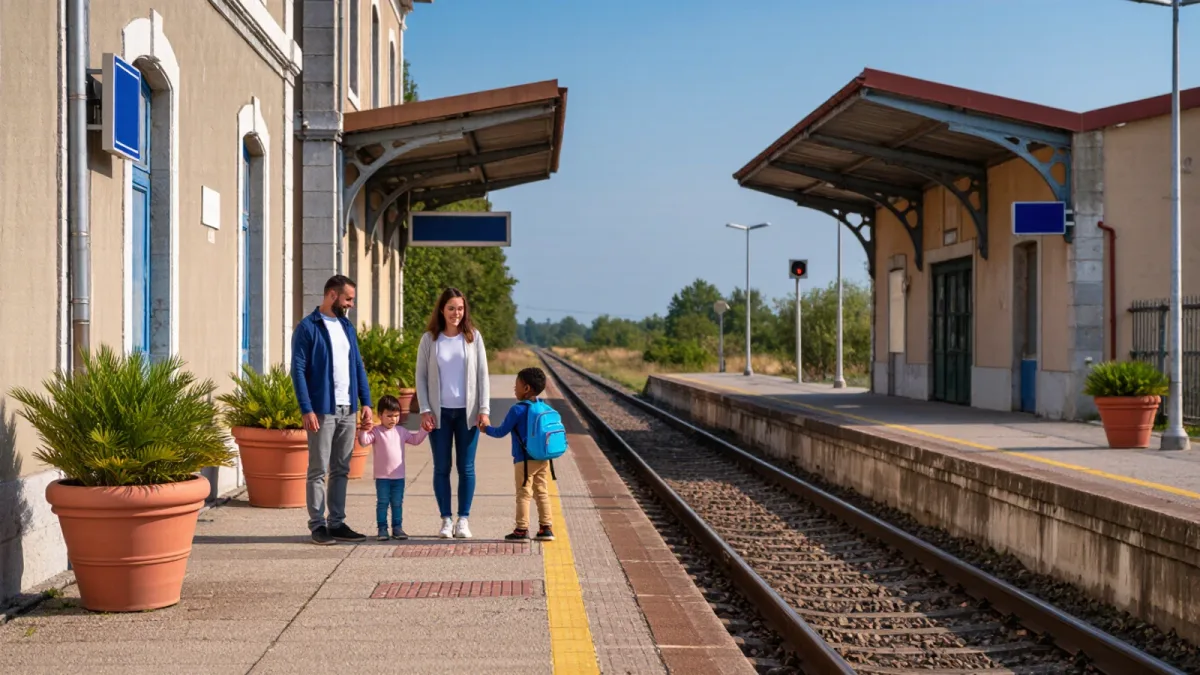
Illness first: a child sick in a rented apartment for a week is the slow family trip's defining stress test, and the mitigations are boring and essential — travel insurance that actually covers children, an apartment near a pharmacy, and an itinerary with slack enough that a lost week does not sink the month. Meltdowns second: they happen everywhere, but a base with a familiar routine absorbs them; a departure board does not. And the pairing trap: slow travel with children works because adults want what children need — routine, repetition, one thing at a time. Families who secretly want the checklist should not disguise it as slowness; the children will find out, usually at the train station.
A final note on the adults, because the method leans on them. Slow family travel asks parents to give up the sightseeing scoreboard — the feeling that a trip must be maximized — and to accept repetition as content: the same playground, the same bakery, the same swim. Families who make that trade describe the unexpected return: the trip stops being a performance for the children and becomes a shared residence in a place, which is what most of them say they actually wanted from family travel in the first place. The children, with three days and a kitchen, will get there on their own. The adults are usually the ones who need the rule written down.