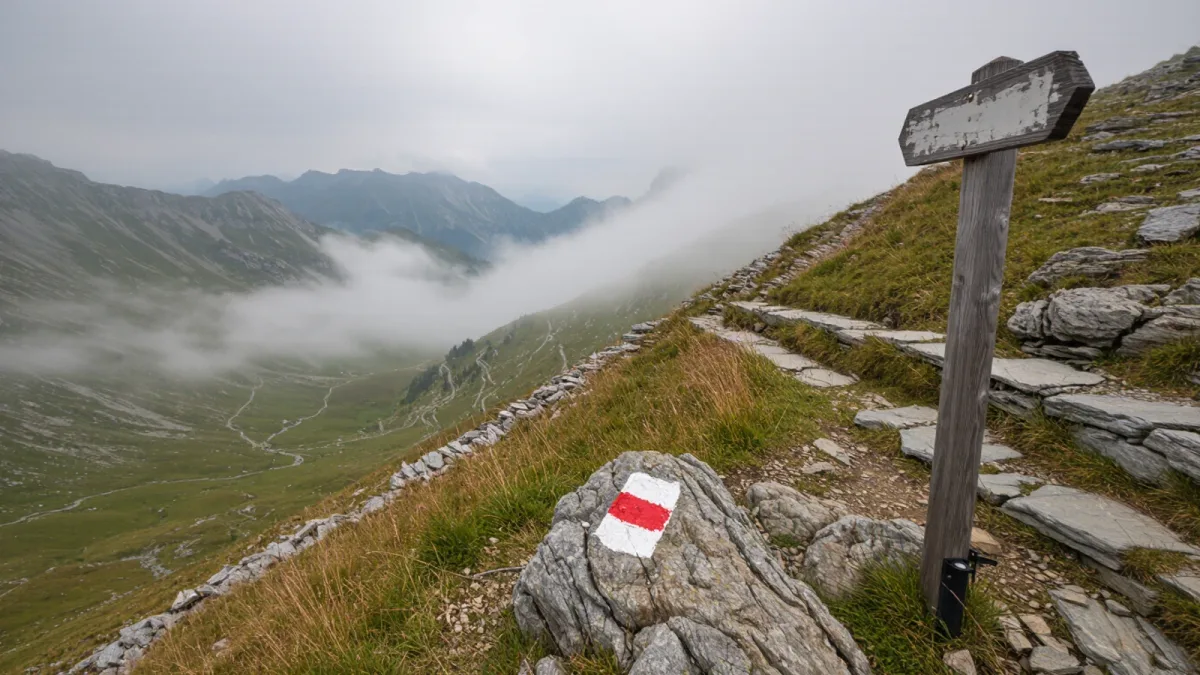
The Alpine trail wardens are the reason a walker can trust a painted mark at 2,500 meters. Switzerland maintains a marked hiking network of roughly 65,000 kilometers, according to the federal hiking trail statistics, longer than the country's motorway and rail systems combined, and a large share of the annual work of clearing, rerouting, and re-marking falls to volunteers organized through local club sections. The Swiss Alpine Club, founded in 1863, is the best known of the bodies involved, and its sections treat a trail maintenance day the way other associations treat an annual meeting: as ordinary membership business, done outdoors.
What does trail wardening actually involve?
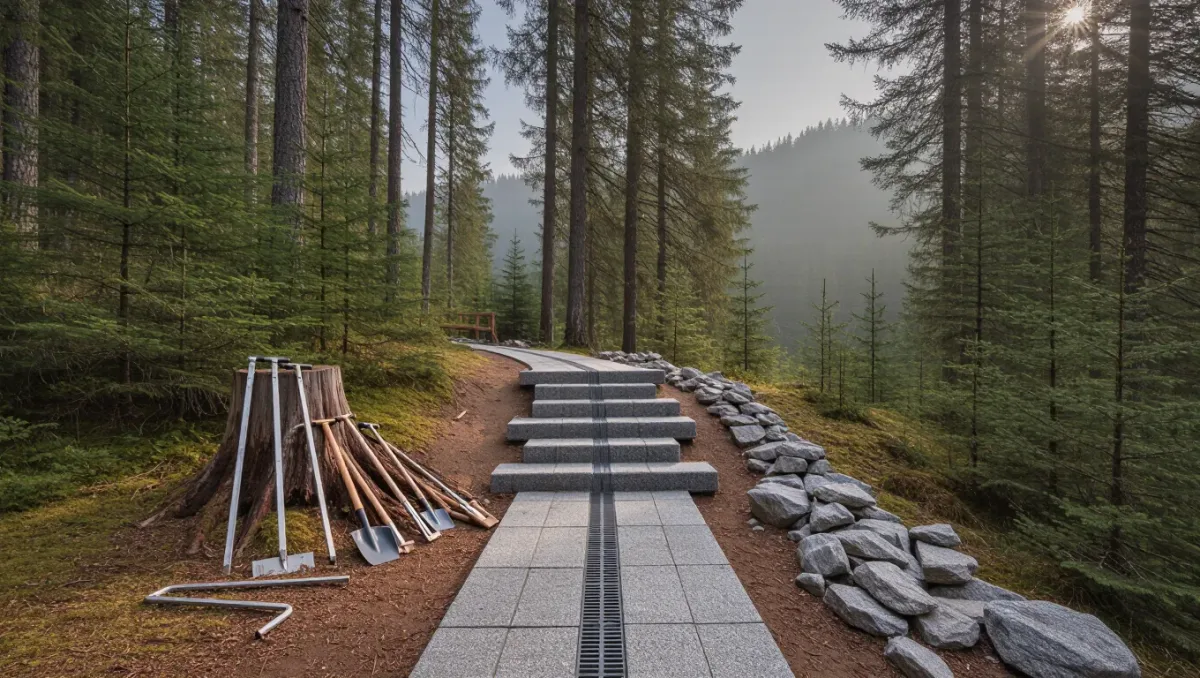
Manual work on a schedule set by the mountain. Each spring, section crews walk their assigned stretches, carrying wire brushes, paint, hammer, and a list. They re-paint waymarks faded by winter, move a path around a slope the meltwater has undermined, cut back growth, rebuild stone steps, and log the damage they cannot fix for the next work camp. On the high routes the enemy is erosion: a single thunderstorm can strip a hillside section to its bedrock, and a path that was fine in September can be impassable by June.
The work is organized locally but standardized nationally. Waymark conventions, difficulty grading, and the right-of-way rules for the three trail classes are set at the federal level, so a volunteer near Zermatt paints the same white-red-white stripe, in the same proportions, as one near Appenzell. The uniformity is deliberate. The system's whole promise to a walker is that the mark means the same thing everywhere, and that promise is kept one bucket of paint at a time.
Who are the volunteers?
Members of the sections, mostly, and mostly people with decades of the mountains behind them. The club's membership skews toward long association: someone joins at twenty-five for the huts and the climbing courses, and at sixty-five joins the maintenance crew for the same reason, which is belonging to a particular set of slopes. The crews include teachers on holiday, engineers, farmers whose alps abut the paths, and a steady minority of younger members who come for the work camps the club and its partners run every summer.
Their motivation is recorded more often than examined, but the pattern in club publications is consistent: people maintain the paths they walk. A member who has hiked the same ridge for forty years knows where the water cuts it and where the cairn should stand. Wardening, in that light, is not altruism toward strangers so much as upkeep of a place one already belongs to, extended to whoever comes after.
The money side of the system is as unglamorous as the paint. Sections budget for maintenance from membership fees and hut revenues, and the larger projects, a rebuilt staircase of stone steps or a rerouted section around an unstable slope, are planned over winters and executed by crews in reserved weeks of the summer. The club huts play their part in the logistics without being the story here: they serve as bases where a work crew can sleep above the work site, cook in quantity, and dry out after a wet week. A section with an active hut and an active maintenance crew tends to be a section with a deep bench, because the two institutions draw on the same membership and reinforce the same habit of showing up.
How old is this arrangement?
Older than the trails it maintains. The Swiss Alpine Club was founded in 1863, when its founders' concern was maps, science, and first ascents, and the club built its first hut before the decade was out. Path-building on that scale followed tourism: as mountain villages turned toward walkers in the late nineteenth century, cure houses and hotels financed paths, and the clubs organized the networks that connected them. Federal law eventually gave hiking trails formal protection, making Switzerland one of the few countries where the right of public access to paths is written into national legislation, and the cantons carry statutory responsibility for keeping the network usable.
That legal frame is why the volunteering works. The state guarantees the network; the clubs and their volunteers supply the labor that a guaranteed network requires; and the two have run in tandem so long that neither side describes the arrangement as unusual. Trail associations in Austria, Bavaria, and South Tyrol run parallel systems under their own national laws, with the same division between public obligation and private hands.
What should a walker know about the system they are using?
That the path underfoot is maintained, not merely present. The practical courtesies follow: keep to the marked line even where shortcuts look obvious, because a trampled shortcut becomes an erosion channel that a crew must repair; close what is closed, since a barrier usually means a section is being repaired or has become dangerous; and if a waymark is missing or a bridge is damaged, report it to the section or the canton, because reports are how crews find problems their spring walks missed.
There is also a quieter point worth carrying. The romance of Alpine walking imagines empty slopes and self-sufficient travelers, but every trustworthy stripe of paint represents a decision by someone to spend a Saturday on a hillside with a brush. The paths feel timeless because the maintenance is continuous. Stand at a waymark junction above the treeline and the system is invisible, which is exactly what its makers intended, and what its keepers, painting below the summit, keep intending.