The lamplighters of London have not been made redundant, only few. Around 1,500 gas lamps still burn in the capital, by the figure widely reported in coverage of the surviving network, concentrated in Westminster, the Royal Parks, and a few protected corners such as the lane beside St Paul's Cathedral, and the utility that maintains them employs lamplighters to do it, in an unbroken occupational line that reaches back to the first lit streets of the 1810s. The job once supported thousands of men and their families. It now supports a handful of specialists who tend the last flames in a city that invented gas lighting.
How did the lamplighters' trade begin?
In the demonstration that changed cities. Gas lighting was proved on the streets of Westminster in the early nineteenth century, and within a generation London had lit thousands of lamps fed by gas works that turned coal into flame. Lighting them was manual piecework: each lamplighter carried a pole with a wick and flame at the end, walked a beat of dozens of lamps at dusk, extinguished them at dawn, and was paid by the lamp. The trade became a London institution, complete with its own races, slang, and, in some districts, employment passed from father to son, which is why the lamplighter belongs to the city's catalog of hereditary trades alongside the watermen and the bellmen.
The work was harder than the Dickensian image allows. Winter beats ran long, oil and gas were dangerous, and the lamplighter's ladder-and-pole technique on tall lamps was genuinely skilled. Contemporary accounts describe the trade's pride in punctuality, since the city's evenings were timed against their rounds; a lamplighter late on a winter's afternoon left a whole street dark, and complaints reached the gas company before the pub did.
Why did the job survive electrification?
Because the lamps were better than their reputation and the city grew fond of them. Electric light displaced gas commercially from the late nineteenth century, but the gas lamp held on where its light suited: parks and garden squares valued its warmer throw, conservation districts valued its period appearance, and the cost of a few hundred flames is small against a capital's vanity. Conversion campaigns periodically proposed replacing the survivors, and preservation campaigns, joined by residents and historians, periodically stopped them. The result is a compromise few other cities kept: a modern metropolis that maintains a working system of nineteenth-century street lighting as a matter of policy.
The modern lamplighter's work reflects the compromise. The rounds are done with van, ladder, and tools rather than a taper pole, but the essential tasks are ancestral, checking mantles, cleaning glass, adjusting flames, attending leaks. Gas lamps need daily attention that electric columns do not, which is why the trade employs people at all: the lamps cannot be left to electricity's seasons of forgetfulness. Those who hold the job describe it as maintenance work with an audience, since tourists photograph the lamps nightly and locals defend them like neighbors.
The gas company's own accounts of the trade, and the newspaper archive's, agree on one detail worth carrying: the lamplighters knew the city as a sequence of lamps rather than streets. Their beats were measured in columns and turns, and long-serving men could name every lamp on a round the way postmen name doors. That map survives in fragments, in the memories of the current crew and in the conservation paperwork that lists each protected lamp by position and date. It is the honest inheritance of a working trade, more accurate than any painting of gaslit London, because it records not how the streets looked but exactly where the light stood in them.
Where can a visitor see the lamps working?
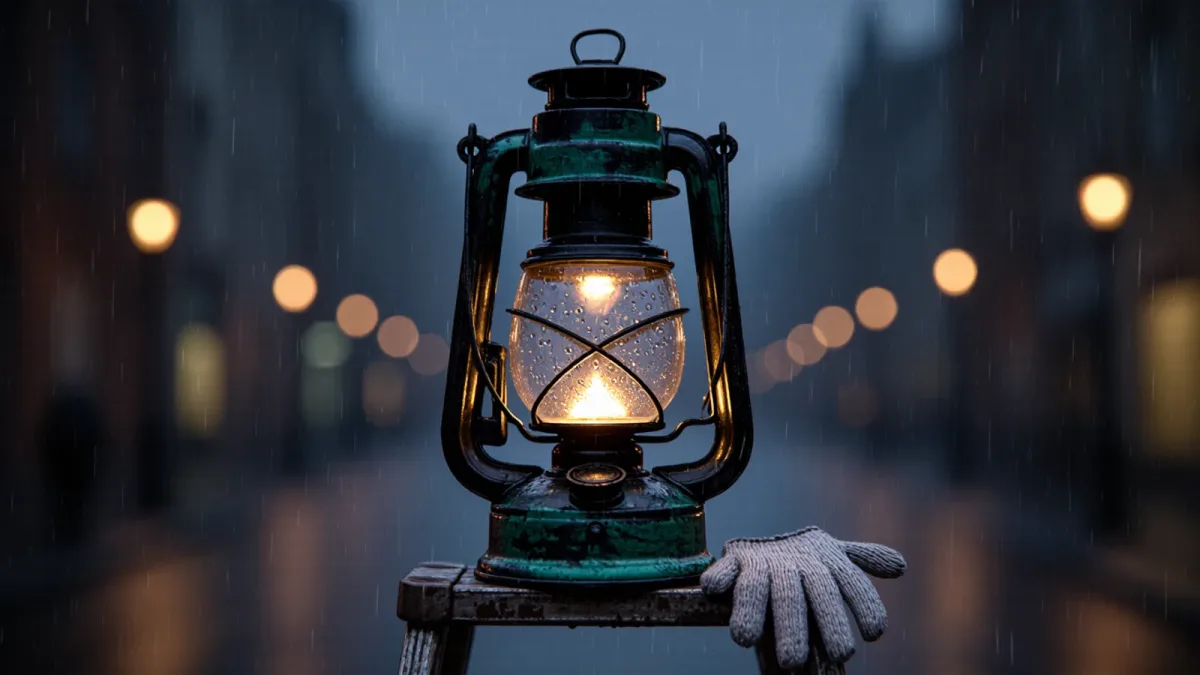
Westminster holds the densest surviving population, including the squares and side streets where the lamps light residential walks as they have for two centuries; the Royal Parks keep gas-lit stretches where the flames mark paths between dark trees; and the cluster by St Paul's, on the lane known as Carter Lane, is probably the most photographed. Evening is the honest time to look, since a gas lamp by day is merely brass and glass, and its light is subtle enough to be drowned by any streetlight nearby. Stand in one of the dark stretches and the difference explains the loyalty: the light is low, warm, and local, pooling at the base of the column rather than flooding the street.
The etiquette of visiting is simply the etiquette of a working system. The lamps are street furniture with a maintenance schedule, not a museum exhibit; photographers who lean tripods against them on a wet evening should remember that a lamplighter may arrive needing the same pavement. The small ceremonial pleasure of the lamps is their reliability, the same flame in the same place as in a great-grandmother's London, and they give it nightly without commentary.
What does the trade's survival mean?
That a city can choose continuity when it wants to. The lamplighters' line survived mechanization, war damage, conversion drives, and fashion, protected at each turn by people who considered the lamps worth their keepers. The occupation that once employed whole families now employs specialists, and the family business became a utility job, but the essential arrangement, a person employed to keep a light against the dark, is the one London invented at scale two centuries ago. It outlasted the empire it lit, one flame at a time, on streets that decided the old light was still the right one.