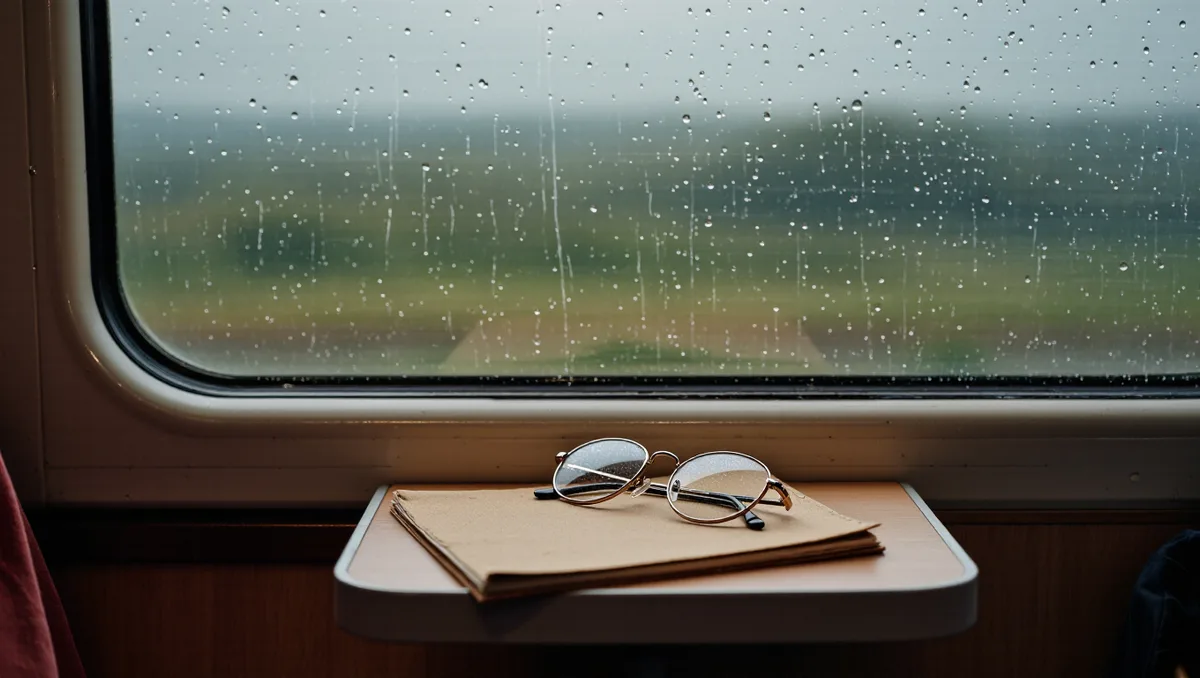
Some places are sold as day trips and read like short stories that stop halfway. The coach leaves at four, the light is just turning, and the part of a place that only shows itself in the evening — the walk home, the second coffee, the conversation with someone who lives there — is the part you never see. The Serbo-Croatian word jednodnevni izleti says it plainly: one-day excursions, trips measured in a single rotation of the sun.
Merriam-Webster defines a day, at its simplest, as the time of light between one night and the next. That definition is the quiet argument of this piece. A day trip spends all of the light moving and none of the dark staying. What follows is a way of reading the popular short excursions — the ones every region markets hardest — and deciding which of them deserve a second morning.
Why the last hours of a day trip are the ones you lose
Ask anyone who has taken a famous day trip what they remember, and the answer is rarely the headline sight. It is the hour before departure: the town emptying of tour groups, the shopkeepers pulling chairs back out onto the pavement, the restaurant menu switching from laminated to handwritten. Day-trip schedules are built around return logistics, not around the destination's own rhythm. The excursion ends exactly when the place begins to belong to itself again.
This is not a small loss. In most destinations that market themselves on short excursions, the daytime economy and the evening economy are run by different people. The morning belongs to coach operators and ticket offices. The evening belongs to the family running the konoba, the baker preparing the next day's dough, the ferry deckhand who lives two streets from the pier. A visitor who leaves at four meets only the first economy, and mistakes it for the town.
What one extra night actually changes
An overnight stay does not add more hours to the same itinerary. It changes what the itinerary can contain at all.
- The second visit. The church, the market, the viewpoint — seen once, they are photographs. Seen again at a different hour, they become a place. Repetition is the slow traveller's cheapest luxury, and it is impossible on a day trip by definition.
- The walk after dinner. Almost every town with a tourist economy has a promenade or a square where residents gather once the day visitors are gone. This is where a place is most itself, and it costs nothing to join.
- The early morning. Before the first bus arrives, a famous destination is briefly a working town. Deliveries, school runs, the market being set up. For a few hours the postcard is just a street.
- Conversation. A day visitor has time for transactions. A guest has time for talk. The difference between the two is the difference between passing through and being received, which is the subject of our guide to being a good guest in someone else's ritual.
Which day trips are worth extending, and which are not
Our analysis is simple: the excursions that reward an overnight are the ones whose main attraction is a place. The ones that do not are the ones whose main attraction is a single object or a single activity.
A trip built around one sight — a tower, a cave, a single museum — often genuinely fits in a day. You arrive, you see it, you leave, and an extra night buys you little beyond a hotel bill. But a trip built around a living landscape or a working industry is different. The salt fields of a tidal coast, a mountain village where a craft has run for generations, a pilgrimage route that fills and empties with the day's light: these run on cycles longer than the time of light between one night and the next. We have written about several of them — the salt fields of Guérande still worked by hand, the pottery village of Mashiko where the wheel never stopped, the volunteers who keep the Camino's shelters open — and the pattern holds. The places that reward patience are the places where someone's working day does not end when yours does. For related coverage, see How Norway's mountain huts still run on a stranger's honesty.
A rough test, before you book:
- Count the rhythms. If the destination has at least two distinct daytime and evening lives — a market that folds, a square that fills — it will repay a night.
- Check the last departure. If the return transport leaves before sunset in any season, the schedule is telling you the trip was designed to be cut short.
- Ask what happens after the coaches leave. If you cannot answer that from the guidebook, that is the part worth staying for.
- Price the difference honestly. One night's lodging against a second round trip, a second lunch, and the fatigue of doing it all twice. Often the overnight is not even more expensive — only slower.
What this means for how you plan
The practical shift is to stop planning excursions and start planning evenings. Choose the place first. Then decide whether the day trip version of it is a preview or a complete sentence. A preview deserves the overnight; a complete sentence does not, and there is no shame in that — some sights really are enough.
Where the overnight makes sense, book lodging inside the destination rather than in the transport hub you arrived from. The whole value of the extra night is proximity: the ability to walk back into the square after dinner, to be there when the market opens, to let the day's second half happen without a timetable. A hotel an hour away by road turns your overnight back into a day trip with a bed in the middle.
It also changes what you owe the place. An overnight guest eats two more meals, sleeps in a local bed, and leaves in daylight rather than in a departure queue. That is the difference between an economy that hosts and an economy that processes. The distinction matters more in small places than large ones, and it is the thread running through most of what we publish under slow travel.
Where the day ends
None of this requires a manifesto. It requires noticing that the phrase day trip contains a decision, not a fact. A day, as the dictionary has it, is simply the light between two nights; what you do with the night in between is the part of the itinerary nobody sells you, and often the part you would keep. The most popular short excursions in any region are popular because they are easy to sell in daylight. The ones worth remembering are usually the ones where you stayed to see what the dark was for.
If the argument lands, it lands because it is already familiar. Nearly every long-form piece this publication has run — from the mountain huts that run on a stranger's honesty to the night train between Paris and Vienna — is, at bottom, a case for staying past the departure time. The whole archive lives in our stories section. The day trips that deserve more than a day are the ones already asking for it; the only question is whether the schedule lets you hear them.