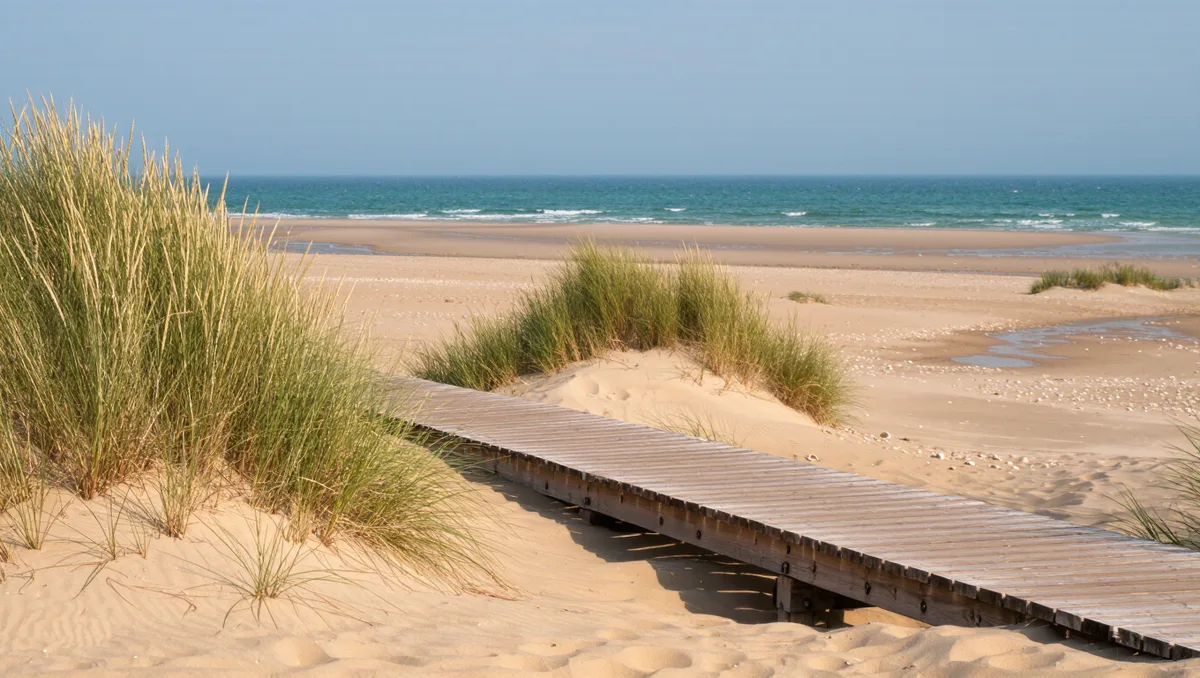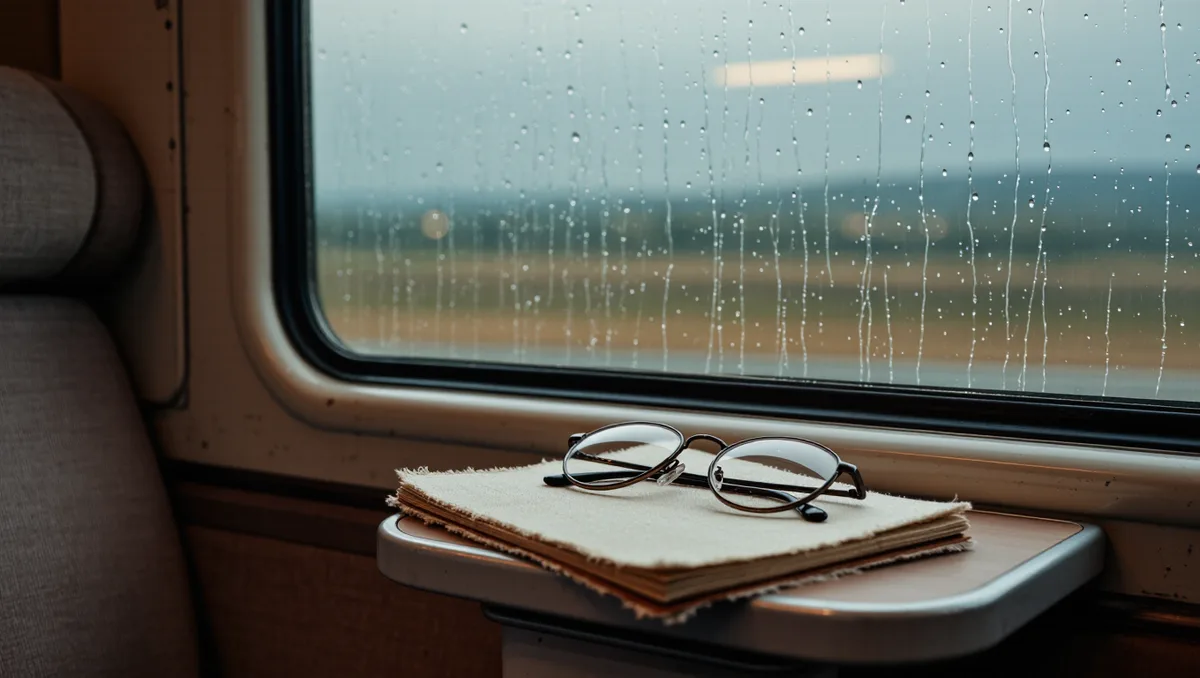
A reader can cross an ocean in an afternoon without leaving a chair. The novel has always made this possible, and it does so by a quiet trick: it asks the reader to live inside someone else's attention for a few hundred pages. The place arrives with the person. You do not see a city; you see what a particular character, with particular worries, notices about it on a particular Tuesday.
That is what makes fiction a strange and useful kind of travel document. It carries none of the authority of a guidebook and none of the guarantees of a news report. What it offers instead is duration. A guidebook tells you where the door is. A novel tells you what it feels like to stand in front of it, hesitating, in weather you have never stood in, speaking a language you do not speak.
Some contemporary writers have pushed this further, building books that work almost like passports to places a reader may never reach. Celia Laskey's fiction is one example of the current appetite for novels that stage the encounter between an outsider and an unfamiliar place as their central subject — the arrival, the misreading, the slow correction. The appeal is not hard to explain. Most of us will see far fewer places than we want to, and fiction is the cheapest, least rationed form of elsewhere.
What a novel actually is, and why the definition matters here
According to Britannica, a novel is "an invented prose narrative of considerable length and a certain complexity that deals imaginatively with human experience, usually through a connected sequence of events involving a group of persons in a specific setting." That phrase — a specific setting — is doing quiet work. The genre has always been tied to places: Britannica traces its long history from Roman prose fiction set in "streets and taverns, not battlefields and palaces," through Cervantes, to the realist and historical modes that followed. The novel, in other words, was born of unheroic, ordinary places, which is roughly where most travel happens too.
The word itself carries the same promise of newness. According to Merriam-Webster, the noun comes from the Italian novella — a little new thing — the term fourteenth-century Italian writers gave to their short fresh tales. A novel is, etymologically, a novelty: something newly minted. Every one of them is, in that sense, a place nobody has visited before, even when the streets are real.
This matters for the travel reader because it sets expectations honestly. Fiction is invented; nothing in it is verified. But the invention is disciplined. A writer who sets a book in a real city has usually walked it, or researched it deeply, and the details that survive into the finished novel are the ones that felt true under pressure. The result is not a report. It is a distillation — less information than a place actually contains, but concentrated in a way raw information rarely is. Readers following this should also see Venice charged day-trippers five euros. The city just learned what that buys..
Why fiction sometimes beats the guidebook
A guidebook is written for everyone, which means it is written for no one in particular. It must be current, correct, and useful to a stranger with luggage. A novel has no such obligations, and that freedom is exactly what it spends. It can linger on a market stall for three pages because a character cannot stop looking at it. It can skip the famous church entirely because the character never goes inside.
The practical consequence for a traveler is real, if hard to measure. Reading a novel set in a place changes how you move through it. You arrive with a sense of its rhythms — when the streets empty, how strangers address each other, what people argue about — that no list of opening hours provides. You also arrive with expectations, some of them wrong, and part of the pleasure of arrival is discovering where the novelist simplified. Fiction prepares you for a place the way a rehearsal prepares you for a performance: imperfectly, but with feeling.
There is a second use, less obvious. Fiction is the best available preparation for places you cannot go. A novel can take a reader into a closed country, a vanished decade, or a community that does not welcome visitors. Where reportage must document and guidebooks must serve, fiction can simply imagine — and imagination, done carefully, is a form of respect. It requires the writer to ask, at length, what a place looks like from inside its own life rather than from a visitor's itinerary.
What this means for how you read before a trip
Our analysis, drawn from how the genre itself works, is simple: treat novels as context, not as confirmation. Three habits make the reading more useful.
- Read the place through its characters, not its landmarks. The most durable knowledge in a novel is social — how people wait, greet, refuse, and mourn — and that is the knowledge most likely to help a visitor behave well.
- Notice what the writer chooses not to see. A novel set in a coastal town that never mentions the sea is telling you something about its characters, and possibly about the town. Fiction's blind spots are part of the document.
- Pair the novel with a documented source. Fiction supplies the texture; archives, histories, and cultural institutions supply the checkable facts. The two together give a fuller picture than either alone.
This is also where the two registers of travel writing meet. A place feature on this site keeps the writer offstage and lets the documented sources lead; a signed essay puts the writer's own verified presence at the center. A novel is a third thing entirely — a documented place filtered through an invented sensibility. Readers who enjoy one often enjoy the others, which is why our essays and our reported culture pieces tend to circle the same questions from different distances.
The limits of the cover story
The metaphor in the title only goes so far, and it is worth saying where it breaks. A novel is not a substitute for a place, and reading it is not the same as going. Fiction compresses; a real trip refuses to. The character's decisive afternoon becomes, in life, a week of logistics and a wrong bus. Some readers find this deflating. It is better understood as the point: the novel gives you the shape of a place, and the trip gives you its weight.
There is also a risk worth naming. Fiction can decorate a place into a set — the picturesque café, the wise local, the charmingly crooked street — and a reader who travels chasing a novel's scenery is chasing a stage set. The corrective is to read widely about a place rather than deeply about one book, and to hold the fiction lightly. The novel is a cover story in the honest sense: a beautiful, partial account that opens the door but should not be mistaken for the room.
What the evidence of the genre's own history establishes is this: the novel has always been about ordinary people in specific places, from the taverns of Roman prose fiction to the settings Britannica catalogs across its realist and historical descendants. What remains unknown is exactly how much of a place any single book can hold. Probably less than the writer hopes and more than the reader expects. That gap is where the next trip begins — with a ticket stub, a departure board, a name you first met in a chapter.
For readers who want the reported side of the same curiosity — how places manage the visitors fiction sends them — our travel news coverage follows the practical side, from Venice's day-tripper fee to Europe's new border system. And the cover story collection gathers more pieces on the books and stories that carry people elsewhere. The reading, like the traveling, is slow on purpose. We covered a connected angle in What Europe's new border system counted in its first quarter.