The best places to travel solo, according to the writers who keep going alone, are rarely the most famous ones. They are the cities and regions where the practical questions answer themselves: a center you can walk, food you can order at a counter, rooms priced for one, and a public life that doesn't require an introduction. Read enough solo travel writing and a pattern emerges. The destination matters less than whether its daily rhythms leave room for a person arriving with no companions and no plan beyond the morning.
That is not a small point. Solo travel removes the buffer a companion provides. There is no one to share a wrong turn with, no second opinion on a late train, no one to hold the table while you find the restroom. What replaces that buffer, in the places writers praise, is structure: old towns built before cars, café cultures that treat a single chair as normal, and transit that runs often enough that waiting alone never feels like a verdict. What solo travel Europe actually asks of you is exactly this: not bravery, but a willingness to let the place's own routines carry part of the load.
This piece gathers what those accounts consistently show, and turns it into a way of judging any destination before you book it. The names below are starting points, not a ranking. The test at the end is the part worth keeping.
What makes a place work for a solo traveler?
Three things do most of the work, and none of them appear on a top-ten list. The first is walkability. When the sights, the meals, and the lodging sit within a compact center, a solo day fills itself: you move on foot, you stop when something interests you, and you never face the question of whether a taxi is worth it for one person. The second is a food culture with counters and communal tables. Ramen counters in Japan, tapas bars in Spain, market halls across Central Europe — all of them let a person eat well without the ceremony a restaurant table for one sometimes attracts. The third is accommodation priced and built for one: guesthouses, monastery stays, and small hotels where a single room is a normal product, not a discount afterthought.
Safety, the worry most first-time solo travelers carry, is usually a matter of logistics rather than character. Writers who travel alone tend to talk less about danger and more about arrival times: landing in daylight, knowing where the night's bed is before setting out, and choosing a first night's stay near the station rather than across town. Those are decisions, not destinations. They transfer anywhere.
Where do solo writers actually go?
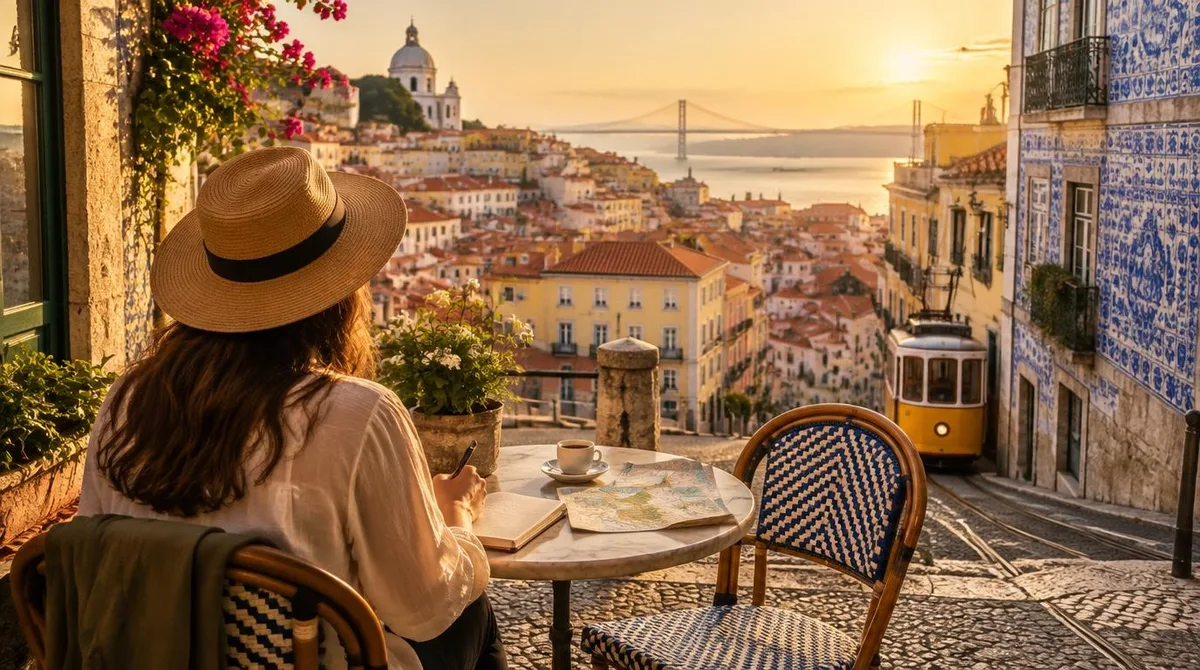
Certain places recur across decades of first-person travel writing, and the reasons are consistent. Cities like Lisbon, Kyoto, and Mexico City offer dense, walkable cores where a day can be improvised. Walking routes — the Camino de Santiago above all — attract solo travelers because the path supplies the company: a moving community of strangers who share meals and miles without demanding more. The shelter system on that route exists because volunteers keep it running, a structure described in the welcome that keeps the Camino's shelters open. A solo walker there is never solo for long unless she wants to be.
Norway's network of mountain huts works the same way. The huts run on an honesty system, unlocked and self-service, and a traveler arriving alone signs the book, takes a bunk, and shares the evening table with whoever else walked in that day. How Norway's mountain huts still run on a stranger's honesty describes a place where solitude and company are both on offer, and the traveler chooses the ratio each night.
For travelers who prefer structure to improvisation, a small group departure can be the honest middle path: alone on the road, not alone in the day. The questions that separate a good small operator from a bad one — group size, local employment, what happens when plans change — are laid out in how to choose a small tour operator you can actually trust.
What this means for choosing your own place
Our analysis of the pattern is this: the best solo destination is the one whose ordinary day accommodates you. Before booking anywhere, run the same three checks the writers' choices imply. Can you reach the historic center from the station on foot or on frequent transit? Is there food culture at counter height, where eating alone is unremarkable? Does the lodging market treat single rooms as standard? If all three answer yes, the destination will work whether or not it is famous. If any answer is no, the trip will still be possible, but it will ask more of you every day.
There is a fourth check that costs nothing and pays oddly well: read what locals complain about, not what tourists praise. Recent reviews of ordinary businesses — a hardware store, a pharmacy, an electronics shop — describe a neighborhood's real rhythms: when things get crowded, how people wait, whether strangers help. Even a store page can carry that texture. The reviews on the Best Buy Staten Island store page, for instance, describe long lines, scheduled product drops, and staff who either rescue an experience or sink it — the small social weather of a place, recorded by the people who live in it. Travelers who read this layer before a trip arrive knowing the neighborhood's tempo, which is exactly the knowledge a solo traveler cannot borrow from a companion.
How do you start, practically?
Start closer and shorter than ambition suggests. A three-day trip to a walkable city two hours from home teaches the solo skills — navigating arrival, eating alone, deciding a day without consulting anyone — at low cost. The writers who make solo travel look effortless usually began exactly there, and the skills compound. After a few close trips, the far ones stop feeling like leaps.
Keep the first evening scripted and the rest open. Book the first night's bed near where you arrive, plan one concrete thing for the first morning, and let everything after that respond to the place. This is the structure behind most successful solo accounts: not a detailed itinerary, but a solid first twenty-four hours that buys the confidence to improvise the rest.
Finally, choose destinations where being alone is culturally legible. In some places, a person at a counter or a pew or a trailhead shelter is simply another person. In others, it draws questions, invitations, or concern. Neither is wrong. But knowing which you are walking into — and which you want — is the difference between a trip that opens up and one that grinds. The destinations that recur in solo writing are the ones where the answer is already yes.
What the evidence leaves open
What the accumulated accounts establish is the shape of a good solo destination: walkable, counter-fed, single-friendly, and honest about its own rhythms. What they cannot establish is which place will suit a particular traveler, because the same quality reads two ways. A hut that forces conversation delights one person and exhausts another. A silent ryokan restores one traveler and isolates the next. The list of best places to travel solo is, in the end, a list of conditions. Match your own temperament to the conditions, and the destination names itself.