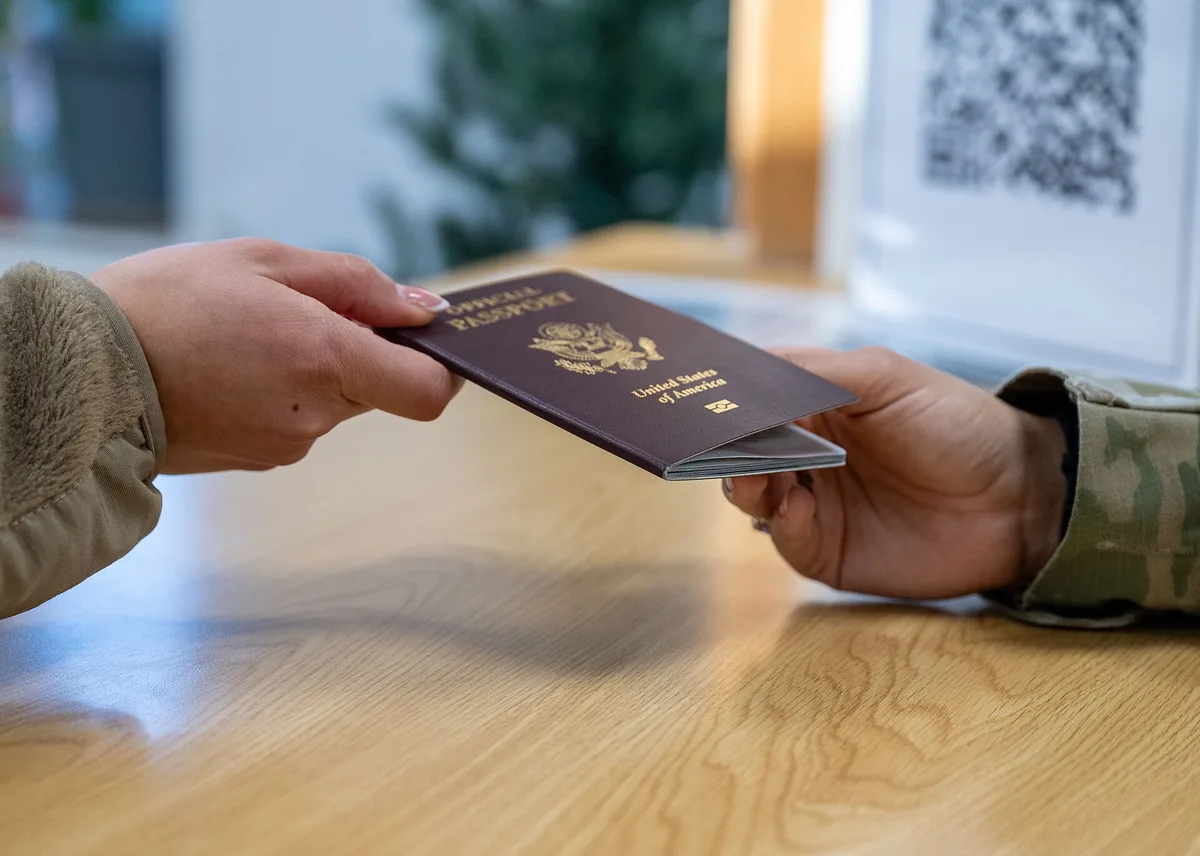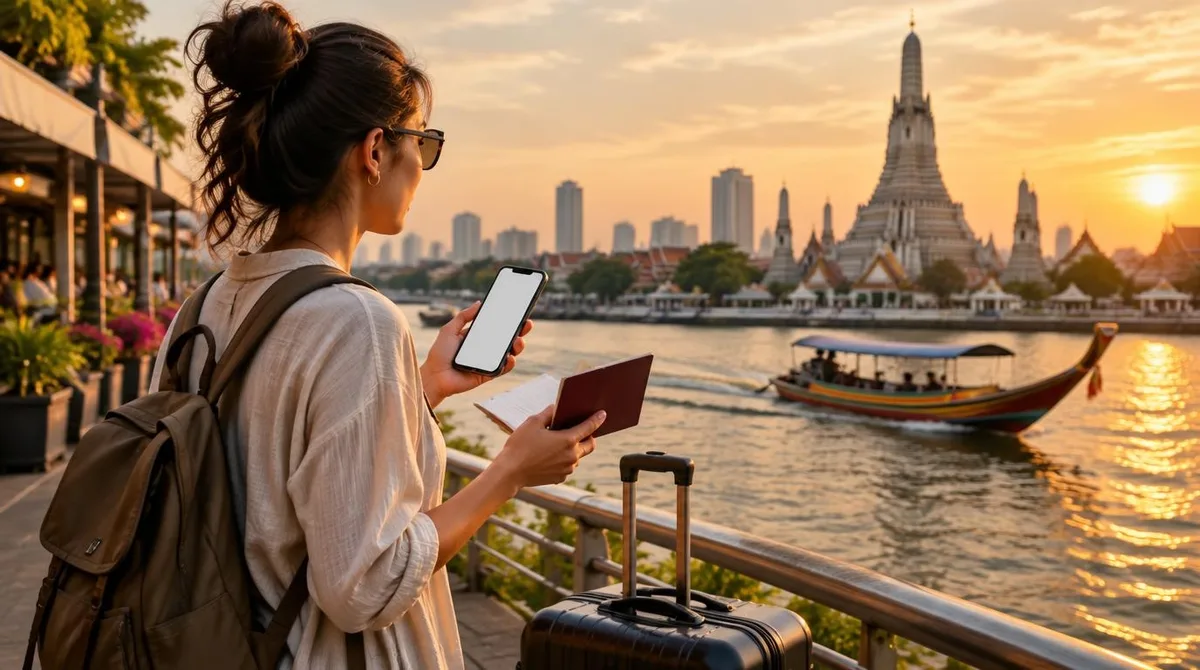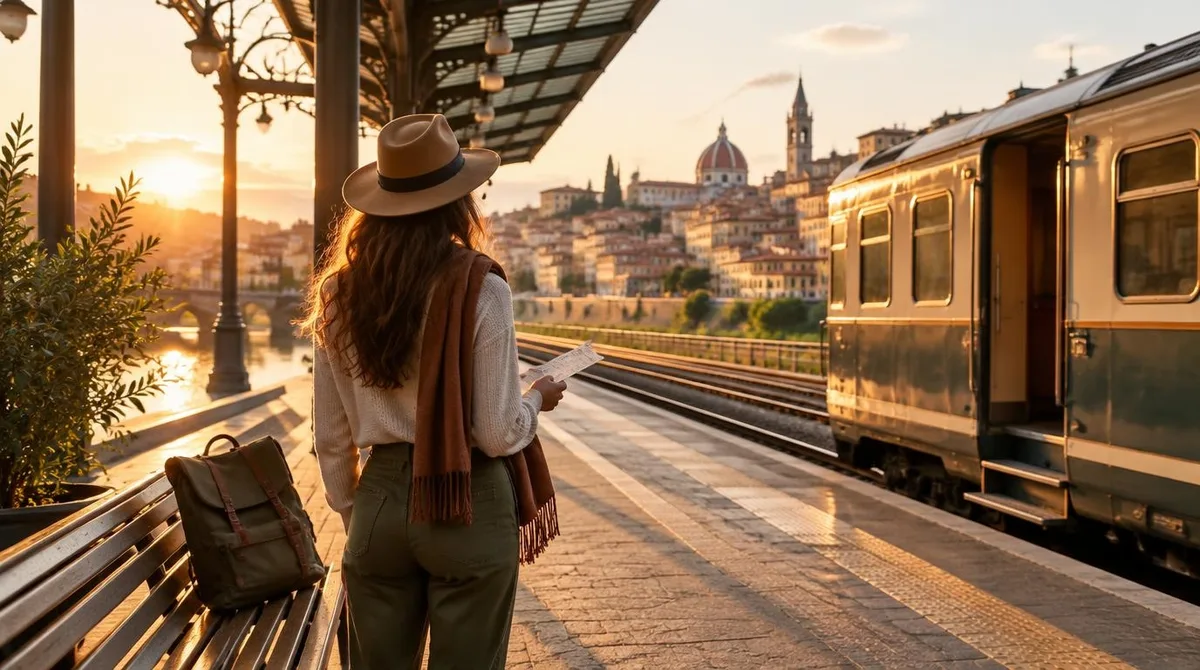
Solo travel Europe promises a particular kind of freedom, and it delivers a different one. The phrase gets used as shorthand for train passes and hostel bunks, but the real experience is quieter: you are the only person responsible for your own time, and nobody is there to soften a wrong turn or confirm a good one. What the road gives back is attention. When no one is talking to you, the platform announcer, the bakery queue, the woman feeding pigeons at the end of a square all become the day's main event.
This is not a guide with a route and a packing list. It is an attempt to describe what traveling alone across Europe looks like in practice — the rhythm of the days, the small logistics that decide whether an evening feels open or lonely, and the safety questions that are mostly about habits rather than danger. The honest answer to "is it worth it" is that it suits some temperaments and not others, and that the difference shows up in the first forty-eight hours, not the fortieth day.
What does a solo day in Europe actually look like?
It looks slower than a shared trip, because every decision runs through one person. There is no negotiation over the morning, no compromise on the museum, no waiting in a hotel lobby while someone finds their shoes. That sounds like pure freedom and often is, but it has a cost: the person who would have said "let's just sit down for a minute" is gone, so many solo travelers push harder than they should and arrive in a new city already tired.
Experienced solo travelers tend to build the day around one anchor — a market, a walk, a long lunch — and let the rest stay unplanned. The anchor matters more than it would on a group trip, because it gives the evening something to be about. A day with no shape is fine in company; alone, it can drift into a series of screens.
How do you handle the practical side alone?
The mechanics are the same ones any traveler deals with — luggage, check-in times, connections — but without a partner to hold the bag or watch the timetable, small frictions become real ones. A few habits carry most of the weight: For related coverage, see Story travel dolomiti — Dolomites without the rush: a week measured in the same trail.
- Book the first night of a new city before you arrive. Finding a bed at eleven at night, alone and loaded down, is the classic rookie mistake, and it is avoidable.
- Keep documents and payment split between two places. One bag, one pocket, one hotel safe — redundancy costs nothing until the day it saves the trip.
- Learn the name of your neighborhood, not just your hotel. Taxi drivers, police, and locals all work from districts, and being able to say where you are staying is the single most useful sentence in a new language.
- Plan arrival for daylight where you can. An unfamiliar street reads very differently at three in the afternoon than at midnight, and the difference is not about the city — it is about you not knowing it yet.
None of this is exotic. It is the operational reason some solo trips feel easy and others feel like a series of recoveries. The travelers who enjoy this style are usually the ones who treat logistics as part of the pleasure rather than an obstacle to it.
What about safety?
Europe is, in general, a low-violence part of the world for visitors, and the standard advice — watch your belongings in crowds, be careful at night in unfamiliar districts, trust your instincts about people and situations — applies here as anywhere. The specific solo dimension is not crime rates; it is that no one is watching your back, so your own habits have to do that work. Share your itinerary with someone at home. Check in regularly, even briefly. Notice exits and well-lit routes the way a hotel night porter does, out of routine rather than fear.
It is also worth saying plainly: the risk that most often derails a solo trip is not theft or assault. It is illness or exhaustion with no one to notice. A traveler who feels unwell in a shared room has someone to fetch water; a traveler alone in a private flat may simply sleep through a problem. Building in rest is a safety measure, not a luxury.
What this means for the kind of traveler you are
Our analysis of how these trips succeed and fail comes down to expectations. Solo travel amplifies whatever you bring to it. Someone who likes their own company finds the days spacious; someone who travels to escape their own company finds the evenings long. Neither is wrong, but the second person should know before booking.
The word itself carries cultural weight beyond the itinerary — the most famous "solo" most people encounter is a film title, not a travel plan. According to Wikipedia, Solo: A Star Wars Story, the 2018 origin film about Han Solo, was one of the most expensive films ever made, with a budget of nearly $300 million. The point of the aside is small but real: going alone has been framed as adventure, risk, and self-invention in the popular imagination for a long time, and the actual practice is far more ordinary — and far more rewarding — than the mythology.
For readers who want the destination-level version of this question, our Best Solo Travel Destinations: Where Going Alone Becomes the Story piece covers where alone works well. And for the slower register of the same idea — a week measured in one trail, one village, one routine — the slow-travel pages are the natural next stop, since solo and slow turn out to be natural companions. This connects to our earlier piece, Best Solo Travel Destinations: Where Going Alone Becomes the Story.
Where solo travel Europe stops being a challenge
At some point on most solo trips, the framing drops away. You stop performing independence, stop narrating the experience even to yourself, and simply live somewhere for a while with a lighter bag than everyone else. Locals stop treating you as a passing stranger; the café remembers the order; the day acquires the texture of residence rather than tourism.
That is the version of solo travel Europe worth working toward, and it is available on almost any budget and almost any route. The evidence for it is not in statistics but in the shape of the days themselves: fewer decisions made by committee, more made by habit, and a growing comfort with being one person in a place built for many. What remains unknown is only whether that suits you — and the only way to find out is to go, once, with the first night already booked.