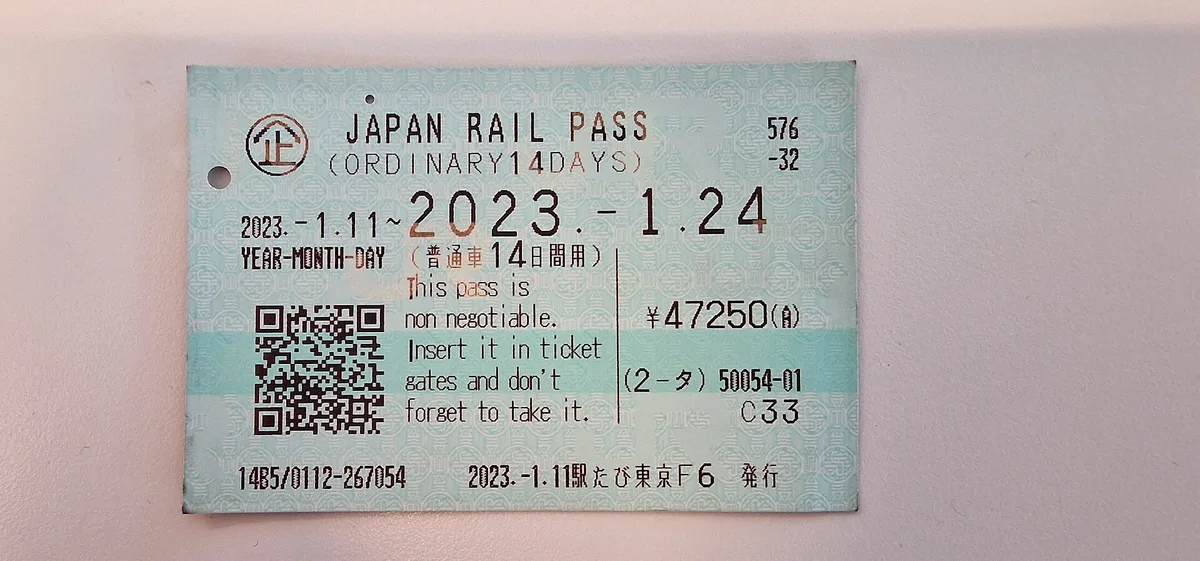
Every long trip meets the same counter. On one side: a rail pass, a rectangle of freedom that promises unlimited trains. On the other: a stack of cheap point-to-point tickets bought as you go. Both are right. The trick is knowing which one your trip is.
Start with what a pass actually is. A rail pass covers train travel in a chosen area within a set period of time. Unlike a point-to-point ticket, it allows unlimited travel inside that area and window; unlike a season ticket, it aims at tourists rather than commuters, as Wikipedia's rail pass overview explains. The idea is old. The first rail pass was the Eurail pass, issued in March 1959.
What a pass really buys you
The first thing it buys is not money. It is spontaneity. You can change your mind in the morning and be in another city by lunch, with no ticket queue and no new fare. For travelers who wander, that flexibility is the whole product. Readers following this should also see The case against the three-month city, and for the long stay.
The second thing is coverage. Some passes cover one country, like the BritRail or Japan Rail Pass. Others cross borders, like Eurail and Interrail. Some cover only a region, such as the passes for JR West or JR Kyushu in Japan. Matching the pass's map to your actual plan is most of the decision.
There is also the shape of the clock. A continuous pass runs every day of its window. A flexipass lets you pay only for the days you travel; a ten-day-in-one-month pass lets you pick which ten days, filling in each date before you board. This connects to our earlier piece, The month-in-one-city method, week by week.
Where the savings quietly leak away
Now the fine print, which is where the math lives. High-speed trains are excluded on some passes, or carry a supplement, as with the France Rail Pass. Japan's pass covers the Shinkansen, but not the fastest Nozomi and Mizuho services. Seat reservations and sleepers can cost extra. In Taiwan, the student version of the TR Pass leaves out the fastest Tze-Chiang trains, while the normal pass includes them. Every exclusion pushes you back toward the ticket window.
Geography has its own trap. If your train crosses a country your pass does not cover, you may pay for that stretch anyway. The classic case is a train from Spain to Italy cutting through France, where the French section can become your own ticket to buy. A pass saves you from fares, not from maps.
When the pass wins, and when it loses
A pass wins when your plan is dense and loose. Many long hops, small towns between big ones, dates still negotiable. It wins harder with the bonuses that often ride along: discounts at certain sights, cheaper buses, ferries or cable cars on some passes, and youth, elder or group fares if you qualify.
It loses when your route is simple. Two or three direct rides between well-served cities rarely justify unlimited travel. It loses again when the up-front price beats the sum of the tickets you would actually buy, or when reservations eat the margin. And very often a pass cannot be used by local citizens at all, which tells you who the pricing is really for.
A simple way to decide
Sketch your route first, honestly, with real fares. Add the trips you might take if they were free. Compare the two numbers. If the pass sits within shouting distance of your sketch, its flexibility is worth the rest. If it does not, buy the cheap tickets and spend the difference on a longer trip.
Conclusion: Buy the trip, not the badge
What a rail pass actually saves you is friction, and sometimes money, and usually a little of both. What it costs you is attention: to supplements, to excluded trains, to the borders on your map. Do the quiet arithmetic, then choose. The best pass is the one that disappears, so that what you remember is the country going past the window.