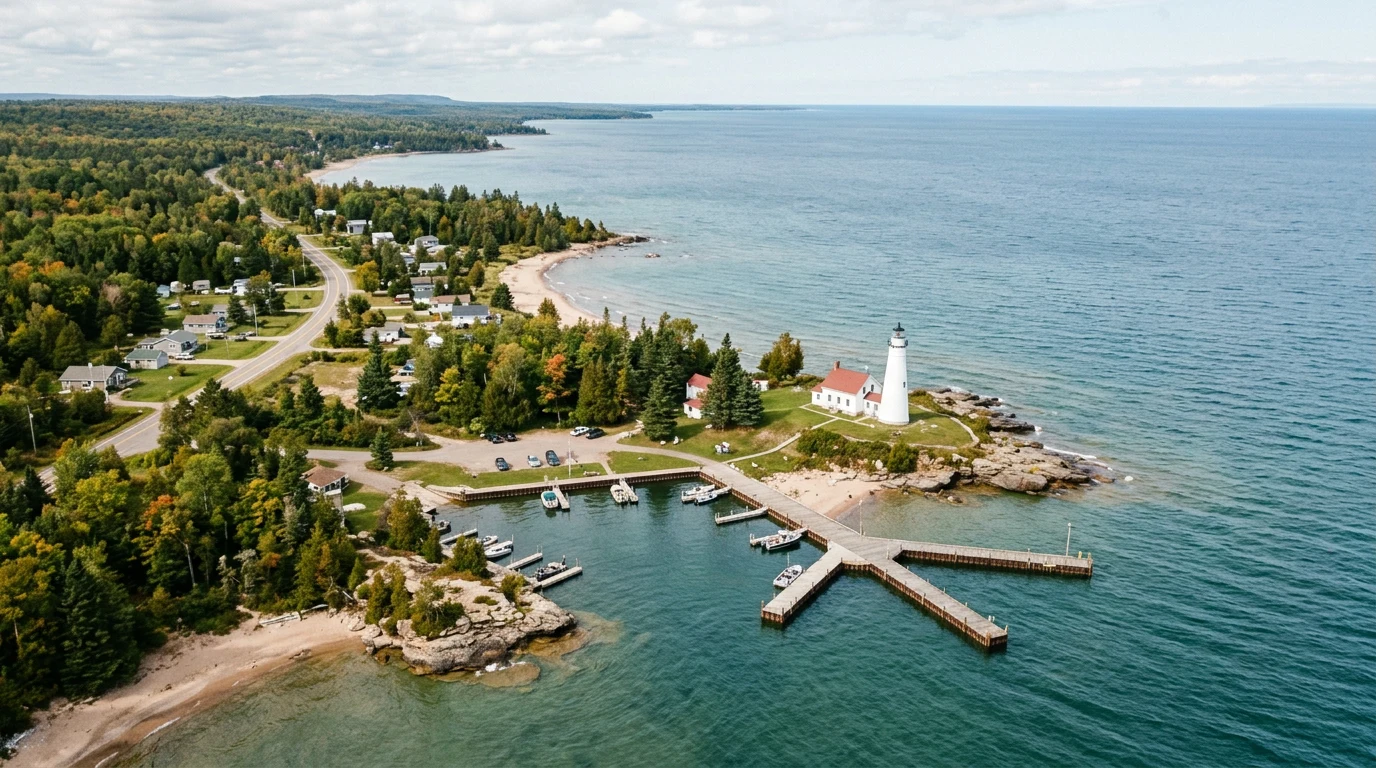
The Great Lakes lighthouse keepers are gone from the lamp rooms, but not from the shoreline. Through the 1960s and 1970s the United States Coast Guard automated the lakes' lights one by one, and by decade's end almost no resident keeper remained. Since the National Historic Lighthouse Preservation Act of 2000, dozens of the old stations have passed from federal hands into those of local governments and nonprofit societies, whose members now climb the same iron stairs the keepers climbed, not for a paycheck but for a town's memory of itself.
Who kept the lights before the machines took over?
The first keepers on the lakes were hired in the 1820s, when steam traffic on Lake Erie made harbor lights a commercial necessity rather than an ornament. The job belonged to the Lighthouse Service until 1939, when it was folded into the Coast Guard, and it was rarely a job in the modern sense. Keepers lived at the station with their families, trimmed wicks before kerosene replaced lard oil in the 1880s, wound clockwork that rotated the lens, scraped ice in January, and rowed supplies ashore when the dock froze. Their logbooks, preserved in the National Archives and at regional historical societies, record weather in one column and small domestic facts in the margins: a child's fever, a visit from the supply tender, a boat that never arrived.
The lakes demanded more of their keepers than the seacoast did. Fresh water freezes, so light stations on the lakes fought ice fields that crushed piers and sheathed cast-iron towers in a foot of spray ice. Storms arrived with little warning, and the shipping season compressed into months of frantic tonnage. Keepers at isolated reefs, such as the stations far out in northern Lake Huron and Lake Superior, stood watches knowing that the nearest help might be hours away and that the lamp they kept was the only fixed thing on the horizon.
What does a volunteer keeper actually do?
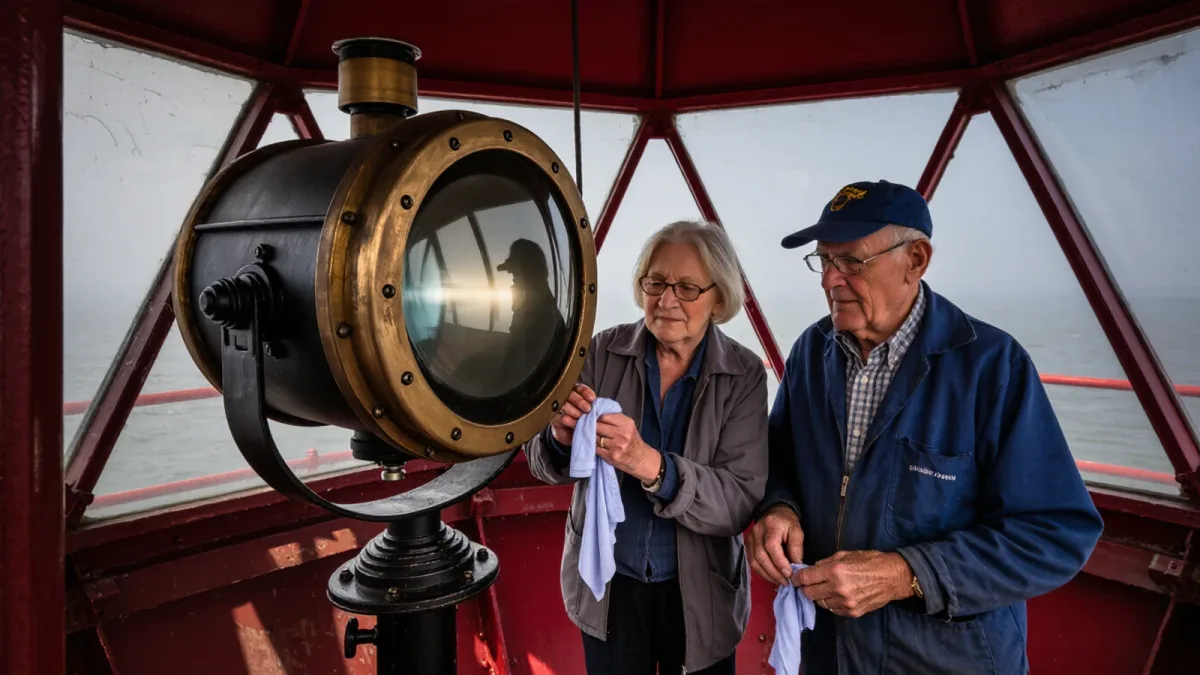
Mostly, maintenance. Societies that hold the lights under 2000-era transfers recruit volunteers for stays that can last a week or more at the remoter stations. The work list reads like the keeper's old logbook continued in a new hand: paint the lantern gallery before the first freeze, clear the boardwalk after a spring gale, clean the brass, and greet the few hundred visitors a summer who arrive by boat. At Whitefish Point on Lake Superior, the Great Lakes Shipwreck Historical Society, founded in 1978, has restored the 1861 light tower and its crew's quarters as a museum, so the keeper's dwelling functions again as a place where people sleep, cook, and watch the weather come in.
The volunteer keeper programs that have spread along the lakes are deliberately unromantic. Applicants are told the electric lamp no longer needs them, and they come anyway, which is the point. What they preserve is not navigation but the building's habit of being tended, and the difference is visible: a light left to the gulls sheds its glass, its paint, then its story, within a decade.
Why did the lakes need so many lights in the first place?
Because the lakes carry some of the busiest fresh-water shipping on earth, and their shores gave ships almost nothing to steer by. The seacoast has lighthouses every few miles where harbors cluster; the lakes needed them at river mouths, reef heads, and the long lonely stretches between, which is why Michigan's shorelines carry more surviving lighthouses than those of any other state. Each had a distinct light character, a rhythm of flashes and eclipses printed on the sailing charts, so that a captain twenty miles out in the dark could tell one white tower from the next.
The titles the keepers answered to changed with the century. Early on, many stations were run by a single family under contract to the government, paid by the year and left to their own judgment between inspections. Later came the civil-service keeper, the head keeper and his assistant, the district inspector's annual tally of paint and oil. The lamps improved and the paperwork grew; the loneliness stayed roughly the same, which is probably why the surviving logbooks read so steadily, one weather entry after another, like breathing.
That system was built and staffed by people whose names mostly survive only in the logs. Some keepers served forty years at a single station; several earned medals for rescues no newspaper recorded. The last chapter of that working life closed when automation reached the lakes, but the transfer law of 2000 turned an ending into a handoff, and the handoff is still in progress.
What happens to a light when nobody tends it?
It becomes a ruin with a good view, and the lakes have enough of those. The societies that accept a light also accept its arithmetic: a fresh coat of paint now is cheaper than a new lantern room later. Visitors who arrive at a station with a volunteer in residence find a swept gallery, a working fog signal exhibit, and someone who can say what the view looked like in the keeper's day, because the volunteers read the same logs. The light itself answers to the Coast Guard, as it has since 1939. The tending is the part that changed hands.
Stand at the base of a Great Lakes tower in October and the reason for all of it is plain: grain boats still pass, dark against the water, running the same routes the keepers' lamps marked. The lamps no longer need watching. The shoreline has decided, through the people who volunteer, that the watching was the tradition worth keeping.